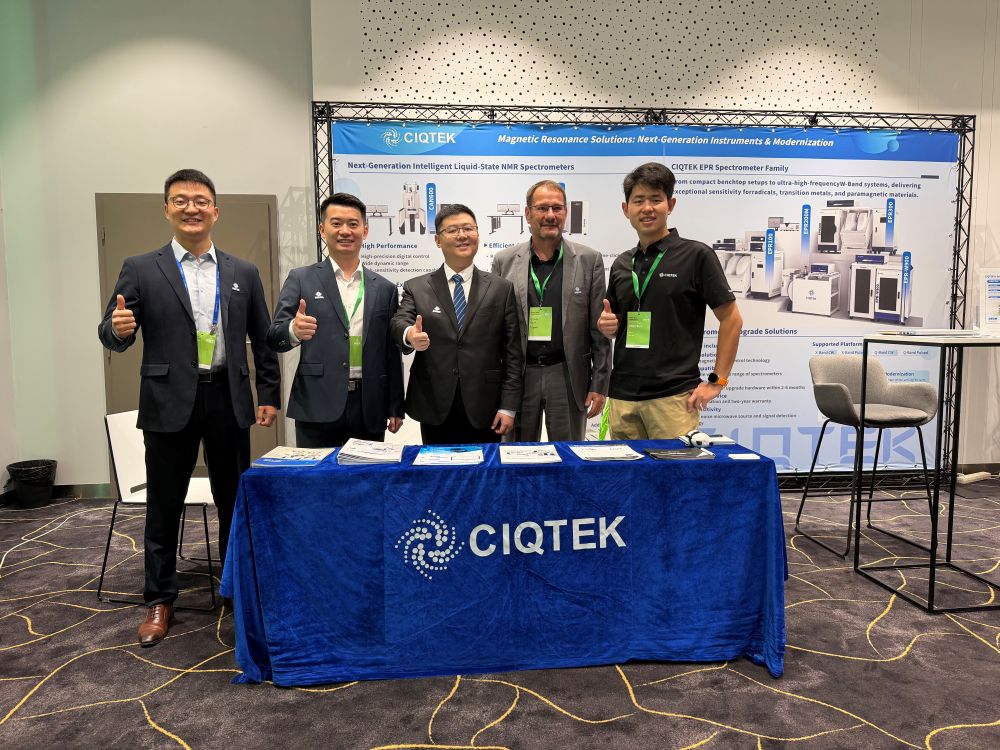
CIQTEK, a leading manufacturer and supplier of advanced Electron Paramagnetic Resonance (EPR) instrumentation, will participate in the 10th ARPE Summer School in Obernai, France. The event will bring together international researchers, instrument scientists, and application experts to explore the latest developments in EPR spectroscopy fundamentals, practical implementations, and hands-on applications. Event Details Date: June 22–26, 2026 Location: Obernai, France (Practical sessions at nearby EPR laboratories in Strasbourg) Improving EPR Skills Through Theory and Practice This year's school is themed "Improving Skills in EPR Spectroscopy: Theoretical Foundations and Practical Implementations." The curriculum covers: CW EPR fundamentals and instrumentation Anisotropic systems and spectral analysis strategies Spin trapping and computational methods Pulse EPR and quantification techniques EPR applications: Physics, Energy, and Health CIQTEK's Contributions to the School The school will feature CIQTEK's participation across both lecture sessions and hands-on practical demonstrations. Tuesday, June 23 — Presentation & Online Demo Format: 35-minute session (15-minute presentation + 20-minute online demonstration) Location: Obernai CIQTEK will deliver a comprehensive presentation on our latest EPR technologies, followed by a live online demonstration showcasing the capabilities and applications of our advanced EPR systems. Wednesday, June 24 — Full-Day Hands-On Practical Sessions Location: EPR Laboratories in Strasbourg Format: Full-day hands-on practical sessions CIQTEK Demo: EPR 200M Spectrometer Duration: 60 minutes per group Groups: 4 sessions Participants will gain direct, hands-on experience with CIQTEK's EPR 200M spectrometer, exploring sample measurement techniques and practical applications under expert guidance. Connecting EPR Users with Instrument Technology In addition to scientific sessions, the school will provide opportunities for direct interaction between EPR users and instrument technology. Participants will have the chance to experience CIQTEK benchtop and pulse EPR spectrometers, and take part in hands-on courses on good practices in EPR. Event Schedule Overview 表格 Day Date CIQTEK Activity Location Tuesday June 23 Presentation + Online Demo (35 min) Obernai Wednesday June 24 Hands-on Demo: EPR 200M (60 min × 4 groups) Strasbourg EPR Labs About CIQTEK CIQTEK is a high-tech company dedicated to the development and manufacturing of advanced scientific instruments. With a strong focus on EPR spectroscopy, we provide innovative solutions that combine cutting-edge technology with user-friendly design, serving research institutions and industries globally.
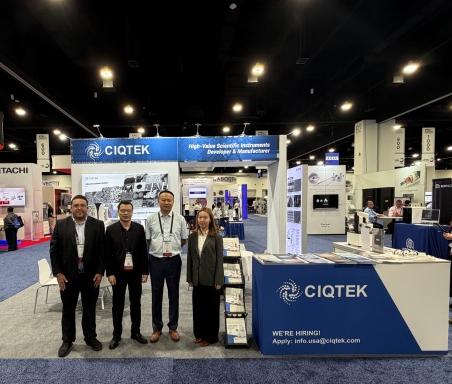
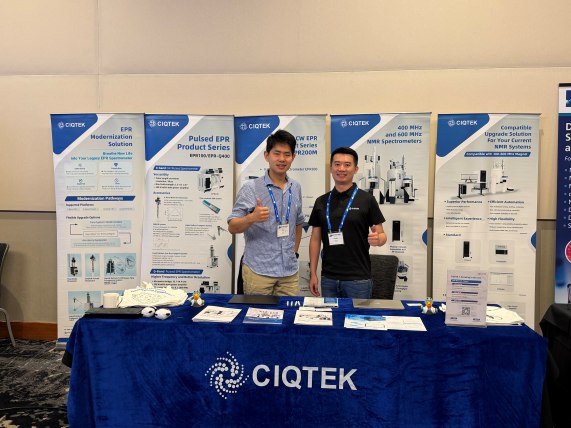
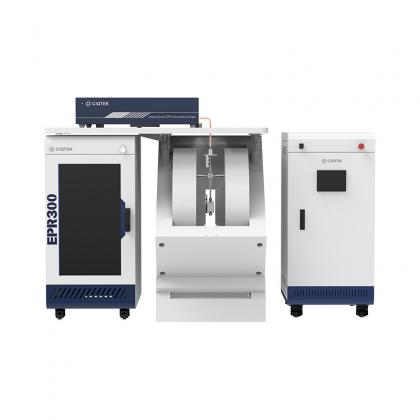
View MoreLille, France — CIQTEK successfully participated in the FBNL-MR 2026 (France-Belgium-Netherlands-Luxembourg joined Magnetic Resonance Conference), held from June 2–5, 2026 in Lille, France. As a proud sponsor of the event, CIQTEK presented its latest innovations in magnetic resonance instrumentation and engaged with the European scientific community throughout the four-day conference. Sponsor Talk Highlights On Tuesday, June 2, CIQTEK delivered Sponsor Talk ST-03 at Amphi A at 15:50. Presented by Dr. Jeff Sun and the CIQTEK team, the talk titled Next-Generation EPR: Combining High-Performance Q Band Instrumentation with Artificial Intelligence Enhanced Spectral Processing drew a strong audience and sparked lively discussions. Key topics covered included: · Q-band pulsed EPR systems featuring advanced Solid-State Power Amplifier (SSPA) technology, delivering superior sensitivity and stability for high-field electron paramagnetic resonance research. · CIQTEK's proprietary three-layer AI EPR model, trained on 100,000+ datasets, achieving 92% precision for real-world sample analysis — enabling automated spectral fitting, characterization, and report generation. · The complete CIQTEK EPR product line: the X-Band CW Benchtop EPR200M, X-Band CW Floor-Standing EPR300, X-Band Pulse Floor-Standing EPR100, Q-Band Pulse EPR-Q400, W-Band EPR-W900, and the Cryogenic Free W-Band System. · The NMR spectrometer portfolio, including the Solution NMR CAN400 and CAN600, alongside the 300–600 MHz Magnet Modernization Solution for upgrading legacy systems. Dr. Sun also highlighted CIQTEK's deep R&D commitment: 190+ scientific staff, 150+ patents, and 40% of revenue reinvested into R&D, underscoring the company's position as a fast-growing, innovation-driven instrumentation provider. Conference Engagement Throughout the conference, the CIQTEK team welcomed researchers from across Europe at the CIQTEK booth, providing in-depth technical consultations on EPR and NMR applications. The team connected with leading scientists during the High-Field Round Table, where experts discussed the future of high-field magnetic resonance and emerging research frontiers. A central message of CIQTEK's presence was its "Proactive Partnership" approach: flexible customization, a dedicated R&D team, and close collaboration with customers to co-develop solutions that meet specific research needs. Looking Ahead CIQTEK extends its sincere thanks to the FBNL-MR 2026 organizers and to all the researchers who visited the booth and attended the sponsor talk. The company remains committed to advancing magnetic resonance technology through AI-enhanced instrumentation, robust hardware platforms, and responsive customer partnerships. Stay tuned for CIQTEK's continued engagement with the global magnetic resonance community at upcoming events. Contact CIQTEK U.S. & North America: info.usa@ciqtek.com International & Other Regions: in...
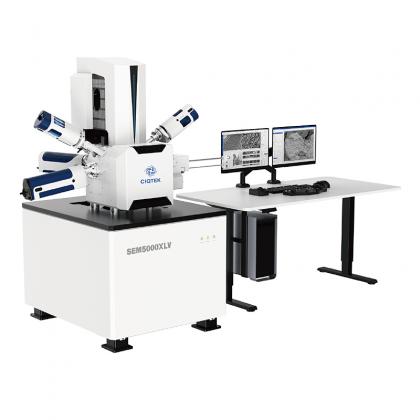
View MoreCIQTEK will showcase electron microscopy solutions and deliver a presentation at the Company Session Hefei, China — From June 9 to 12, 2026, the SCANDEM 2026 Annual Meeting of the Nordic Microscopy Society will be held in Oulu, Finland. CIQTEK, a leading provider of quantum precision measurement and electron microscopy solutions, announces its participation in this prestigious event. CIQTEK will highlight two core electron microscopy products at Booth II.5 and deliver a presentation at the Company Session to engage with leading researchers and experts in the global microscopy community. About SCANDEM 2026 SCANDEM is one of the longest-standing and most influential annual microscopy conferences in the Nordic region. This year’s meeting is jointly organized by the Biocenter Oulu Material Analysis Center and the Nordic Microscopy Society, and will take place at the Kieppi Building of Biocenter Oulu. The conference spans two major thematic areas: life sciences (from whole-organism imaging to molecular-level techniques) and materials science (metallurgy, geology, catalysts, nanoparticles, and more). The program features plenary lectures, scientific presentations, poster sessions, and an exhibition hall, expecting approximately 120–150 attendees and around 20 instrument vendors. Notably, Oulu has been designated as the European Capital of Culture 2026, offering visitors from around the world a unique cultural atmosphere and vibrant innovation. CIQTEK Exhibition Highlights Booth Information CIQTEK’s booth is located at II.5 in the exhibition area. The team will present two core electron microscopy products on-site, with technical specialists available to provide detailed product introductions and technical consultations. Featured Products SEM5000X Ultra-High Resolution FESEM: CIQTEK’s flagship field emission scanning electron microscope. It features an advanced electron optical system delivering ultra-high resolution imaging, making it ideal for precision nano-structural analysis in materials science, semiconductors, and life sciences. HEM6000 High-Speed SEM: A high-throughput workstation engineered for large-area and batch inspection. With outstanding high beam current, exceptional stability, and automated workflows, it significantly accelerates imaging speeds for industrial quality control and advanced research. Company Presentation CIQTEK will present at Session 1 (Company Session LS1+MS1, Room 101A) from approximately 11:00 to 11:10. Presenter: Miles, Solutions Specialist at CIQTEK Topic: “Unlocking the Power of Unique High-Speed Scanning Electron Microscopy Solution from CIQTEK” This presentation will explore the fundamental principles behind high-speed Field Emission Scanning Electron Microscopy (FESEM) and reveal how this cutting-edge technology is transforming across-scale and large-data imaging and analysis. Miles will explain what makes CIQTEK’s high-speed FESEM uniquely different a...
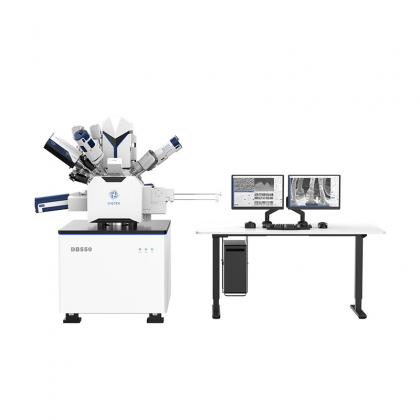
View MoreThe CIQTEK DB550 dual-beam FIB-SEM brings together high-resolution electron imaging and precision ion beam processing on a single platform. CIQTEK has validated its DB550 Focused Ion Beam Scanning Electron Microscope (FIB-SEM) on real 5nm process node chip samples, demonstrating production-ready TEM sample preparation with intact fin structures, zero amorphization, and clearly resolved film layers. The results confirm that the DB550 meets the exacting demands of advanced semiconductor failure analysis labs working at the cutting edge of process technology. In advanced chip research and manufacturing, two tools matter above all others. The Transmission Electron Microscope (TEM) lets you see structures at the atomic scale. But before you can look, you need a sample thin enough for electrons to pass through. That is where the dual-beam FIB-SEM comes in. It is the precision workshop that prepares those ultra-thin specimens. Meet the DB550: One Platform for Imaging and Nanoscale Processing The CIQTEK DB550 FIB-SEM integrates two powerful capabilities onto a single platform. On one side, a scanning electron microscope (SEM) delivers high-resolution surface imaging. On the other, a focused ion beam (FIB) performs nanoscale material removal with surgical precision. Together, they bridge the gap between observation and fabrication at dimensions measured in billionths of a meter. At the heart of the DB550 sits a low-voltage, high-resolution electron column paired with CIQTEK's proprietary "Chengying" ion column, developed entirely in-house. The Chengying column is the engine behind the system's nanoscale cutting and etching capabilities. CIQTEK controls the full design and manufacturing pipeline for this critical component. The 5nm Challenge: Why Sample Preparation Gets Harder at Every Node At 5nm and below, chip architectures rely on fin-type field-effect transistors (FinFETs) with fin widths and pitches measured in just a few nanometers. The DB550 is designed to handle the full sample preparation workflow for these demanding process nodes. It starts with high-current rough cutting to quickly remove bulk material and reach the target region. Then it transitions to low-voltage fine polishing to thin the sample to TEM-ready dimensions without damaging the delicate structures underneath. TEM Validation: The Proof Is in the Image CIQTEK prepared a 5nm process node chip sample on the DB550 and transferred it to a TEM for characterization. The results speak for themselves. TEM characterization of a 5nm chip sample prepared on the DB550 shows intact fin structures with clear, well-defined film layers and no amorphization damage. The TEM images revealed that the fin structures remained completely intact after FIB preparation. There was no detectable amorphization in the silicon crystal lattice. The individual film layers appeared clear and sharply defined in the TEM cross-section. These results validate the dual-beam sample preparation performance of the DB550 on...
View MoreA Winning Team: SEM + FIB, the "Golden Combination" CIQTEK brings SEM and FIB together as a powerful team, providing critical support for PCB process optimization, reliability verification, and root cause determination of failures. SEM High-Resolution Imaging: The "Microscope" for Surface Details The SEM uses a high-resolution electron beam to capture crisp images of PCB surface morphology. It reveals solder pad plating, intermetallic compounds, micro-cracks, tin whiskers, and foreign particle contamination with exceptional clarity. Coupled with energy-dispersive X-ray spectroscopy (EDS), the SEM also performs elemental analysis on microscopic regions. This combination lets engineers identify the chemical signature of defects, making it straightforward to spot issues like short circuits, open circuits, corrosion, and plating anomalies. FIB Nanoscale Cutting: The "Scalpel" for Internal Structures While the SEM excels at surface imaging, the FIB takes over when you need to see what is happening inside the board. Using a nanometer-precision ion beam, the FIB performs targeted cross-sectioning at the exact defect location. It prepares ultra-thin slices through multi-layer boards, blind vias, and buried vias, exposing internal structures that mechanical sectioning simply cannot reach. Think of the FIB as a microscopic surgical tool. It removes material with nanometer accuracy, leaving a clean cross-section ready for imaging and analysis. CIQTEK Semiconductor Showcase: See It in Action The Beauty of the Microscopic World, Revealed in Every Detail. Here are real examples of CIQTEK electron microscopes in PCB cross-section observation: Solder Joint Interface Panorama Low magnification observation of capacitor overall morphology, viewing the real microscopic structure of the capacitor solder joint interface from the inside IMC Layer Evaluation Evaluating interlayer bonding, measuring IMC thickness and uniformity, detecting voids, cracks, and interface defects Multi-Layer Board Inner Structure Clear observation of IMC layer morphology, thickness, continuity, and density at the solder pad and solder interface Process Reliability Evaluation Evaluating trace pattern, thickness, etching quality and copper-to-substrate bonding, detecting line shift, etch defects, delamination, voids, and analyzing plating layer quality for PCB process control and reliability assessment Built for Labs That Demand Reliability CIQTEK develops its electron microscopy platforms from the ground up, covering core algorithms through hardware design. This vertical integration ensures consistent performance and long-term supply stability, which matters for labs running continuous production or multi-year research programs. The company backs its instruments with responsive technical support and regular software updates, helping users keep their systems running efficiently over time. Get in Touch If you are evaluating SEM or FIB systems for ...
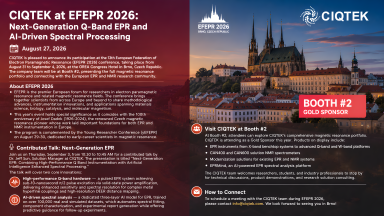
View MoreCIQTEK, a leading manufacturer and supplier of advanced Electron Paramagnetic Resonance (EPR) and Nuclear Magnetic Resonance (NMR) instrumentation, will participate in the “France-Belgium-Netherlands-Luxembourg joined Magnetic Resonance Conference (FBNL-MR 2026)” in Lille, France. The event will bring together leading researchers, instrument scientists, and application specialists from across Europe and beyond to exchange the latest developments in EPR and NMR spectroscopy. Event Details Date: June 2–5, 2026 Location: Lille, France CIQTEK Sponsor Talk: Tuesday, June 2, 15:50–16:00 (10 min), Amphi A Talk Title: Next-Generation EPR: Combining High-Performance Q Band Instrumentation with Artificial Intelligence Enhanced Spectral Processing Advancing EPR Through Hardware and AI Integration As research moves toward increasingly complex biological and material systems, CIQTEK addresses these challenges by developing high-performance hardware alongside the first dedicated AI model for EPR. This presentation will focus on how CIQTEK’s integrated approach enables: • Higher sensitivity and spectral resolution with Q-band pulsed EPR systems using Solid-State Power Amplifier technology, deciphering complex metal hyperfine couplings and extracting dipolar information for high-resolution DEER distance mapping • Automated spectral analysis through a three-layer AI EPR model trained on over 100,000 real and simulated datasets — achieving 99.9% precision for simulations and 92% for real-world samples • Streamlined workflow from raw data to publication with automated spectral fitting, component characterization, and experimental report generation, plus predictive guidance suggesting follow-up experiments • Lower technical barriers for researchers in chemistry, biology, and materials science, driving EPR toward a more impactful and accessible technology Talk Abstract Advancing EPR requires a dual focus on robust hardware and intelligent software to bridge the gap between complexity and discovery. Our Q-band system enhances sensitivity and resolution, deciphering complex hyperfine couplings and richer dipolar data for precise distance mapping. Meanwhile, the AI assistant automates fitting, characterization, and reporting with 92% precision for real-world samples, providing predictive guidance for further sample verification. This unified approach lowers technical barriers and maximizes scientific output, empowering the community with higher efficiency and greater data reliability. Visit the CIQTEK Booth In addition to our sponsor talk, CIQTEK is a proud sponsor of FBNL-MR 2026 with a dedicated exhibition booth at the conference venue. We warmly welcome all attendees to visit our booth for more in-depth discussions about our EPR and NMR solutions. Our team will be available to provide: • On-site technical discussions with CIQTEK engineers to answe...
View MoreTemperature is not just an environmental setting in electron paramagnetic resonance (EPR) spectroscopy. It is a core experimental parameter, right up there with microwave power and magnetic field range. Choose the right temperature, and you unlock sharper signals, stronger sensitivity, and structural details that room-temperature measurements simply cannot reveal. Choose wrong, and your signal may disappear entirely. This guide walks through the physics of variable-temperature EPR and helps you pick the right setup for your samples. Why Temperature Matters So Much in EPR Every EPR experiment involves three questions. How does temperature reshape the microscopic spin environment? How does it affect spectral interpretation? And which systems absolutely require variable-temperature measurements? Let us break it down. Cooling: The Simplest Way to Boost Sensitivity The EPR signal comes from a simple fact. Unpaired electrons occupy two spin energy levels, and the difference in population between those levels is what we detect. In an external magnetic field B0, electron spins undergo Zeeman splitting, creating two levels with ms = +1/2 and ms = -1/2. The energy gap between them is: The Boltzmann distribution governs how electrons populate these levels. The population ratio depends on temperature in a very direct way: Here is what this means in practice. The EPR signal intensity is proportional to the population difference between the two levels. That difference scales as 1/T. In other words, lower the temperature, and your signal gets stronger. Period. Temperature is an independent, fully controllable variable, so cooling your sample is the most fundamental and direct way to boost absolute sensitivity in EPR spectroscopy. EPR spectra of a weak coal sample measured at different temperatures. Lower temperatures deliver dramatically stronger signals. (Measured on CIQTEK EPR system.) Cooling Slows Relaxation, Revealing Hidden Signals Temperature does not just affect signal strength. It also controls spin relaxation, which determines whether you can detect a signal at all. Relaxation in magnetic resonance falls into two categories. Spin-lattice relaxation (T1). This is the process where excited spins exchange energy with the surrounding crystal lattice. It is highly temperature-sensitive. At room temperature, lattice vibrations are vigorous. Excited spins dissipate their energy quickly, so T1 is short. Cool the system down, and you effectively "freeze" those lattice vibrations. T1 lengthens dramatically. Spin-spin relaxation (T2). This arises mainly from magnetic dipolar interactions between neighboring spins. It is less directly affected by temperature. Spin-lattice relaxation rate as a function of temperature. The strong temperature dependence shows why cooling is essential for short-relaxation systems. (Ref: Phys. Chem. Chem. Phys., 2020, 22, 15751-15758) T2 controls the spectral linewidth. The homogeneous linewidth is inversely proportional...
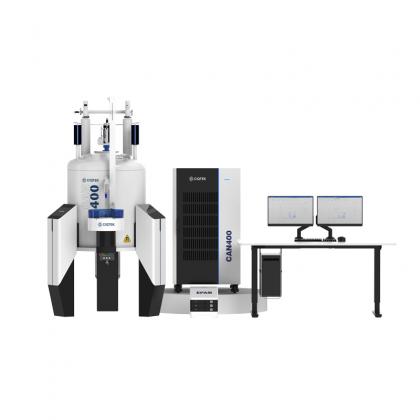
View MoreCIQTEK CAN400 NMR Spectrometer Becomes a Trusted Research Partner at China Pharmaceutical University Some NMR labs are busy. And then there are labs like the one at China Pharmaceutical University, where the instruments run around the clock, bookings stretch past midnight, and the sample queue fills every available slot. In that kind of environment, the instrument at the center of it all has to deliver. Clean spectra, day after day. No downtime. And it has to be simple enough for graduate students to run on their own during those late-night shifts. At China Pharmaceutical University (CPU), the CIQTEK CAN400 NMR spectrometer has met all of these demands. After nearly a year of continuous, high-volume operation, it has become a workhorse in the university's testing platform. It handles over 100 samples per day. It has maintained a zero-failure record. And perhaps most importantly, the researchers who rely on it say the data looks great. In this article, we will walk through how CPU selected the CAN400, how it has held up in one of the busiest academic NMR labs around, and why the day-to-day details matter just as much as the numbers on a spec sheet. Why NMR Spectroscopy Sits at the Heart of Pharmaceutical Research To understand why CPU needed a dependable NMR system, it helps to know what kind of institution this is. China Pharmaceutical University sits at the foot of Zhongshan Mountain, along the Yangtze River in Nanjing. It was founded over eighty years ago, and it has built a reputation as one of the top schools for pharmaceutical research and education in China. The university's pharmacy program earned an A+ rating in China's most recent national discipline evaluation. Its medicinal chemistry program has been ranked first in China and third globally, with a long history of producing influential research in drug design, molecular synthesis, and bioactive compound modification. At the heart of all this is organic chemistry. Every new drug candidate starts as a molecule that someone has to design, synthesize, and then characterize. That is where NMR spectroscopy comes in. For medicinal chemists, NMR is not a nice-to-have tool. It is the primary method for confirming molecular structures, assessing purity, and collecting the analytical data that supports publications and patent filings. So it is no surprise that the NMR lab at CPU is one of the busiest places on campus. The spectrometers run twenty-four hours a day. Students and faculty carry NMR tubes in and out of the lab at all hours. For countless research projects, the NMR spectrum is the first real data point that tells a researcher whether their synthesis worked. It is the bridge between an idea and a verified result. Given this workload, the university needed an instrument that could keep up. Solid technical performance. Continuous operation without issues. And it had to be easy enough for anyone to use, from first-year grad students to senior faculty. The College of Science building ...
View More
No. 1969, Kongquetai Road, High-tech Zone, Hefei, Anhui, China
+8615156059133
+8613083191369
info@ciqtek.com
Sitemap | XML | Blog | Privacy Policy | IPv6 network supported