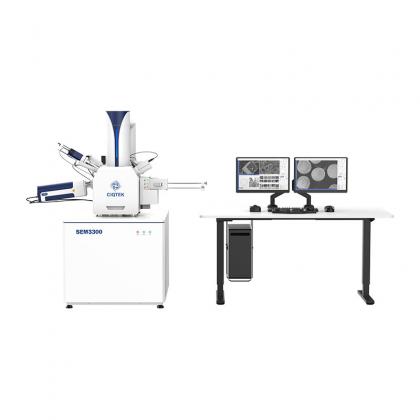
Solid-state lithium metal batteries (SSLMBs) are widely recognized as the next-generation power source for electric vehicles and large-scale energy storage, offering high energy density and excellent safety. However, their commercialization has long been limited by the low ionic conductivity of solid electrolytes and poor interfacial stability at the solid–solid interface between electrodes and electrolytes. Despite significant progress in improving ionic conductivity, interfacial failure under high current density or low-temperature operation remains a major bottleneck. A research team led by Prof. Feiyu Kang, Prof. Yanbing He, Assoc. Prof. Wei Lü, and Asst. Prof. Tingzheng Hou from the Institute of Materials Research, Tsinghua Shenzhen International Graduate School (SIGS), in collaboration with Prof. Quanhong Yang from Tianjin University, has proposed a novel design concept of a ductile solid electrolyte interphase (SEI) to tackle this challenge. Their study, entitled “A ductile solid electrolyte interphase for solid-state batteries”, was recently published in Nature. CIQTEK FE-SEM Enables High-Resolution Interface Characterization In this study, the research team utilized the CIQTEK Field Emission Scanning Electron Microscope (SEM4000X) for microstructural characterization of the solid–solid interface. CIQTEK’s FE-SEM provided high-resolution imaging and excellent surface contrast, enabling researchers to precisely observe the morphology evolution and interfacial integrity during electrochemical cycling. Ductile SEI: A New Pathway Beyond the "Strength-Only" Paradigm Traditional inorganic-rich SEIs, though mechanically stiff, tend to suffer from brittle fracture during cycling, leading to lithium dendrite growth and poor interfacial kinetics. The Tsinghua team broke away from the “strength-only” paradigm by emphasizing “ductility” as a key design criterion for SEI materials. Using the Pugh’s ratio (B/G ≥ 1.75) as an indicator of ductility and AI-assisted screening, they identified silver sulfide (Ag₂S) and silver fluoride (AgF) as promising inorganic components with superior deformability and low lithium-ion diffusion barriers. Building on this concept, the researchers developed an organic–inorganic composite solid electrolyte containing AgNO₃ additives and Ag/LLZTO (Li₆.₇₅La₃Zr₁.₅Ta₀.₅O₁₂) fillers. During battery operation, an in-situ displacement reaction transformed the brittle Li₂S/LiF SEI components into ductile Ag₂S/AgF layers, forming a gradient “soft-outside, strong-inside” SEI structure. This multi-layered design effectively dissipates interfacial stress, maintains structural integrity under harsh conditions, and promotes uniform lithium deposition. Figure 1. Schematic illustration of the component screening and functional mechanism of the ductile SEI during solid-state battery cycling. Figure 2. Structur...
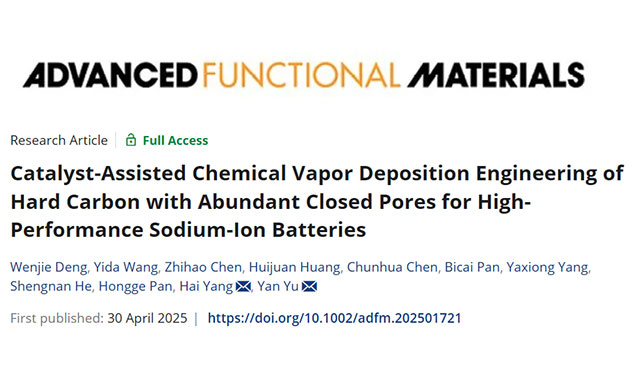
View MoreSodium-ion batteries (SIBs) are attracting attention as a cost-effective alternative to lithium-ion batteries, thanks to the abundant sodium content in Earth’s crust (2.6% vs. 0.0065% for lithium). Despite this, SIBs still lag in energy density, highlighting the need for high-capacity electrode materials. Hard carbon is a strong candidate for SIB anodes due to its low sodium storage potential and high capacity. However, factors like graphite microdomain distribution, closed pores, and defect concentration significantly impact initial Coulombic efficiency (ICE) and stability. Modification strategies face limits. Heteroatom doping can raise capacity but reduce ICE. Traditional CVD helps form closed pores but suffers from slow methane decomposition, long cycles, and defect buildup. Professor Yan Yu’s team at the University of Science and Technology of China (USTC) utilized the CIQTEK Scanning Electron Microscope (SEM) to investigate the morphology of various hard carbon materials. The team developed a catalyst-assisted chemical vapor deposition (CVD) method to promote CH₄ decomposition and regulate the microstructure of hard carbon. Transition metal catalysts such as Fe, Co, and Ni effectively lowered the energy barrier for CH₄ decomposition, thereby improving efficiency and reducing deposition time. However, Co and Ni tended to cause excessive graphitization of the deposited carbon, forming elongated graphite-like structures in both lateral and thickness directions, which hindered sodium-ion storage and transport. In contrast, Fe facilitated appropriate carbon rearrangement, resulting in an optimized microstructure with fewer defects and well-developed graphite domains. This optimization reduced irreversible sodium storage, enhanced initial Coulombic efficiency (ICE), and increased the availability of reversible Na⁺ storage sites. As a result, the optimized hard carbon sample (HC-2) achieved an impressive reversible capacity of 457 mAh g⁻¹ and a high ICE of 90.6%. Moreover, in-situ X-ray diffraction (XRD) and in-situ Raman spectroscopy confirmed a sodium storage mechanism based on adsorption, intercalation, and pore filling. The study was published in Advanced Functional Materials under the title:Catalyst-Assisted Chemical Vapor Deposition Engineering of Hard Carbon with Abundant Closed Pores for High-Performance Sodium-Ion Batteries. As illustrated in Figure 1a, the hard carbon was synthesized via a catalyst-assisted chemical vapor deposition (CVD) method using commercial porous carbon as the precursor and methane (CH₄) as the feed gas. Figure 1d shows the adsorption energies of CH₄ and its dehydrogenated intermediates on metal catalysts (Fe, Co, Ni) and porous carbon surfaces, indicating that the introduction of metal catalysts lowers the energy barrier for CH₄ decomposition, with Fe being the most effective in promoting the breakdown of CH₄ and its intermediates. High-resolution TEM (HRTEM) images under differ...
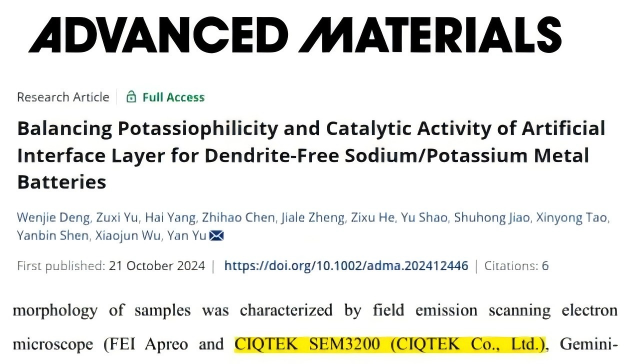
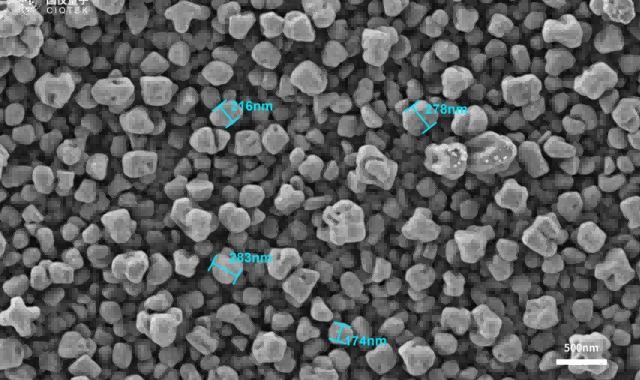
View MoreProfessor Yan Yu's team at USTC utilized the CIQTEK Scanning Electron Microscope SEM3200 to study the post-cycling morphology. It developed amorphous carbon with controllable defects as a candidate material for an artificial interface layer balancing potassiophilicity and catalytic activity. The research team prepared a series of carbon materials with different degrees of defects (designated as SC-X, where X represents the carbonization temperature) by regulating the carbonization temperature. The study found that SC-800 with excessive defects caused substantial electrolyte decomposition, resulting in an uneven SEI film and shortened cycle life. SC-2300, with the fewest defects, had insufficient affinity for potassium and easily induced potassium dendritic growth. SC-1600, which possessed a locally ordered carbon layer, exhibited an optimized defect structure, achieving the best balance between potassiophilicity and catalytic activity. It could regulate the electrolyte decomposition and form a dense and uniform SEI film. The experimental results demonstrated that SC-1600@K exhibited long-term cycle stability for up to 2000 hours under a current density of 0.5 mA cm-2 and a capacity of 0.5 mAh cm-2. Even under higher current density (1 mA cm-2) and capacity (1 mAh cm-2), it maintained excellent electrochemical performance with stable cycles exceeding 1300 hours. In full-cell testing, when paired with a PTCDA positive electrode, it maintained 78% capacity retention after 1500 cycles at a current density of 1 A/g, demonstrating outstanding cycle stability. This research, titled "Balancing Potassiophilicity and Catalytic Activity of Artificial Interface Layer for Dendrite-Free Sodium/Potassium Metal Batteries," was published in Advanced Materials. Figure 1: The microstructure analysis results of carbon samples (SC-800, SC-1600, and SC-2300) prepared at different carbonization temperatures are presented. Through techniques such as X-ray diffraction (XRD), Raman spectroscopy, X-ray photoelectron spectroscopy (XPS), and wide-angle X-ray scattering (WAXS), the crystal structure, defect level, and oxygen and nitrogen doping of these samples were analyzed. The results showed that as the carbonization temperature increased, the defects in the carbon materials gradually decreased, and the crystal structure became more orderly. Figure 2: The current density distribution during potassium metal growth on different composite negative electrodes was analyzed using finite element simulation. The simulation results showed that the SC-1600@K composite electrode exhibited a uniform current distribution during potassium deposition, which effectively suppressed dendritic growth. Additionally, the Young's modulus of the SEI layer was measured using atomic force microscopy (AFM), and the results showed that the SEI layer on the SC-1600@K electrode had a higher modulus, indicating its stronger firmness and inhib...
View MoreHigh-performance lithium copper foil is one of the key materials for lithium-ion batteries and is closely related to battery performance. With the increasing demand for higher capacity, higher density, and faster charging in electronic devices and new energy vehicles, the requirements for battery materials have also been raised. In order to achieve better battery performance, it is necessary to improve the overall technical indicators of lithium copper foil, including its surface quality, physical properties, stability, and uniformity. Analysis of microstructure using scanning electron microscope-EBSD technique In materials science, the composition and microstructure determine the mechanical properties. Scanning Electron Microscope (SEM) is a commonly used scientific instrument for the surface characterization of materials, allowing observation of the surface morphology of copper foil and the distribution of grains. In addition, Electron Backscatter Diffraction (EBSD) is a widely used characterization technique for analyzing the microstructure of metallic materials. By configuring an EBSD detector on a field-emission scanning electron microscope, researchers can establish the relationship between processing, microstructure, and mechanical properties. The figure below shows the surface morphology of electrolytic copper foil captured by the CIQTEK Field-emission SEM5000 Copper Foil Smooth Surface/2kV/ETD Copper Foil Matte Surface/2kV/ETD When the sample surface is sufficiently flat, electron channel contrast imaging (ECCI) can be obtained using the SEM backscatter detector. The electron channeling effect refers to a significant reduction in the reflection of electrons from crystal lattice points when the incident electron beam satisfies the Bragg diffraction condition, allowing many electrons to penetrate the lattice and exhibit a "channeling" effect. Therefore, for polished flat polycrystalline materials, the intensity of backscatter electrons depends on the relative orientation between the incident electron beam and the crystal planes. Grains with larger misorientation will yield stronger backscattered electron signals and higher contrast, enabling the qualitative determination of grain orientation distribution through ECCI. The advantage of ECCI lies in its ability to observe a larger area on the sample surface. Therefore, before EBSD acquisition, ECCI imaging can be used for rapid macroscopic characterization of the microstructure on the sample surface, including observation of grain size, crystallographic orientation, deformation zones, etc. Then, EBSD technology can be used to set the appropriate scanning area and step size for crystallographic orientation calibration in the regions of interest. The combination of EBSD and ECCI fully utilizes the advantages of crystallographic orientation imaging techniques in materials research. By using ion beam cross-section polishing technology, CIQTEK obtain...
View MoreI. Lithium-ion battery The lithium-ion battery is a secondary battery, which mainly relies on lithium ions moving between the positive and negative electrodes to work. During the charging and discharging process, lithium ions are embedded and de-embedded back and forth between the two electrodes through the diaphragm, and the storage and release of lithium-ion energy are achieved through the redox reaction of the electrode material. Lithium-ion battery mainly consists of positive electrode material, diaphragm, negative electrode material, electrolyte, and other materials. Among them, the diaphragm in the lithium-ion battery plays a role in preventing direct contact between the positive and negative electrodes, and allows the free passage of lithium ions in the electrolyte, providing a microporous channel for lithium ion transport. The pore size, degree of porosity, uniformity of distribution, and thickness of the lithium-ion battery diaphragm directly affect the diffusion rate and safety of the electrolyte, which has a great impact on the performance of the battery. If the pore size of the diaphragm is too small, the permeability of lithium ions is limited, affecting the transfer performance of lithium ions in the battery, and making the battery resistance increases. If the aperture is too large, the growth of lithium dendrites may pierce the diaphragm, causing accidents such as short circuits or explosions. Ⅱ. The application of field emission scanning electron microscopy in the detection of lithium diaphragm The use of scanning electron microscopy can observe the pore size and distribution uniformity of the diaphragm, but also on the multi-layer and coated diaphragm cross-section to measure the thickness of the diaphragm. Conventional commercial diaphragm materials are mostly microporous films prepared from polyolefin materials, including polyethylene (PE), polypropylene (PP) single-layer films, and PP/PE/PP three-layer composite films. Polyolefin polymer materials are insulating and non-conductive, and are very sensitive to electron beams, which can lead to charging effects when observed under high voltage, and the fine structure of polymer diaphragms can be damaged by electron beams. The SEM5000 field emission scanning electron microscope, which is independently developed by GSI, has the capability of low voltage and high resolution, and can directly observe the fine structure of the diaphragm surface at low voltage without damaging the diaphragm. The diaphragm preparation process is mainly divided into two types of dry and wet methods. The dry method is the melt stretching method, including the unidirectional stretching process and bidirectional stretching process, the process is simple, has low manufacturing costs, and is a common method of lithium-ion battery diaphragm production. The diaphragm prepared by the dry method has flat and long microporous (Figure 1), but the prepared diaphragm is thicke...
View MoreIn January 2022, the CatLiD-I 675 near-bit follow-on measurement system provided by CIQTEK-QOILTECH achieved a successful operation well in the Linxingzhong gas field located at the transition location between the Yishaan slope and the Jinxi flexural fold zone in the Ordos Basin, which the related parties well recognized. The lithology of the top and bottom of the seam of the target layer of this well is mainly mudstone and carbonaceous mudstone. The coal seam is buried at a large depth, and there is less reference data available in the surrounding wells. The coal seam section is prone to wall collapse and well leakage, downhole stuck drilling, buried drilling, and other complicated accidents. Moreover, the well slope adjustment is large due to landing advance. The CIQTEK-QOILTECH CatLiD-I 675 near bit was picked up from 2208 m and the retest curve matched the upper instrumentation, providing data for guidance to give an accurate landing point. When landing, due to the advancement of the coal seam, the trajectory goes down to the bottom of the coal seam, and the gamma curve of the near bit measures the complete curve pattern of the coal seam from the top to the bottom, which provides a basis for judging the position of the borehole trajectory inside the coal seam later. The gamma curve change of near bit in drilling is obvious with high resolution and accurately judges the position in and out of the coal seam and within the coal seam. The accurate change of the value of gangue in the coal seam can effectively determine the location of the trajectory, which improves the drilling encounter rate and smoothness of the borehole trajectory. The service section of this well is 2208-3208m, with cumulative footage of 1000m and a drilling encounter rate of 91.7%; a trip to drill to completion depth, with a cumulative downhole time of 168 hours, 53.5 hours of pure drilling, and an average mechanical drilling speed of 18.69m/h, which greatly shortens the drilling cycle! The on-site crews of CIQTEK-QOILTECH and related teams worked together to shorten the drilling cycle, increase the drilling encounter rate, reduce the risk, and finally received high praise from everyone! The CIQTEK-QOILTECH CatLiD-I 675 near-bit measurement system is a perfect completion.
View More
No. 1969, Kongquetai Road, High-tech Zone, Hefei, Anhui, China
+8615156059133
+8613083191369
info@ciqtek.com
Sitemap | XML | Blog | Privacy Policy | IPv6 network supported