Applications
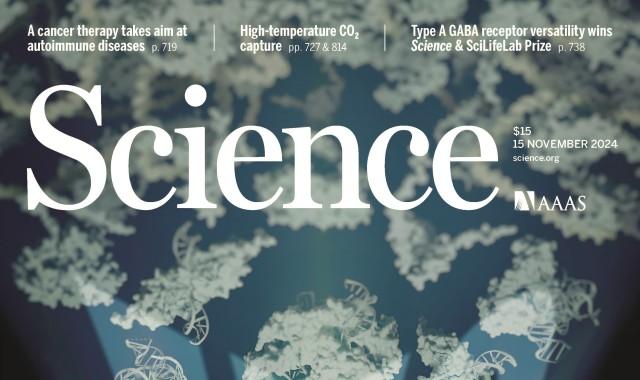
'Science' Publications: CIQTEK EPR Facilitates Research on Catalytic Reactionisms
Recently, the research teams led by Professor Aiwen Lei from Wuhan University and Professor Lin He from Lanzhou Institute of Chemical Physics, Chinese Academy of Sciences, made a significant breakthrough in asymmetric urea synthesis. Their research results, titled "Synchronous recognition of amines in oxidative carbonylation toward unsymmetrical ureas" were published in the prestigious international journal "Science" on November 15th.   Published in "Science" with the Support of CIQTEK EPR   Unsymmetrical ureas are important compounds widely used in medicine, agriculture, and materials science. The synthesis of unsymmetrical ureas through amine reactions is the most effective method. However, achieving high selectivity in synthesizing unsymmetrical ureas is challenging due to the competitive reactivity of the two amines. So far, no metal-catalyzed method can efficiently and selectively recognize and install multiple amines at the same site.   In their research, the teams deeply analyzed the electron transfer process between copper salts and amines and successfully detected the in situ-generated ammonium radical cation and its captured radical species with DMPO during the reaction. This provided crucial evidence for revealing the copper ion-mediated free radical activation mechanism of secondary amines. Combining the selective nucleophilic activation of primary amines by cobalt catalysts, the teams designed a "synchronous recognition strategy" that achieved efficient carbonylation reactions of a 1:1 molar ratio of two amines, producing highly selective unsymmetrical urea products.   This achievement provides new avenues for the industrial production of unsymmetrical urea compounds and is expected to have broad applications in fields such as medicine and agriculture. It also demonstrates the precise characterization capabilities of the EPR spectrometer developed by CIQTEK, providing strong support for researchers to deepen their understanding of reaction mechanisms and develop innovative synthesis strategies.   The research paper was published in "Science" and can be accessed at the following link: https://www.science.org/doi/10.1126/science.adl0149   A "Timely Rain" that Achieves Customer Satisfaction, Scripting a Success Story   Behind this achievement is a story of collaboration between CIQTEK and the research team. In October 2021, an imported EPR spectrometer at the College of Chemistry and Molecular Sciences, Wuhan University, encountered a sudden malfunction.   After contacting the manufacturer, they learned that the repair would take a long time. This posed a challenge for the experimental work of the faculty and students.   In December of the same year, at the invitation of the faculty, engineers from CIQTEK overcame the challenges posed by the pandemic and arrived on-site to troubleshoot the issue. They quickly identified a problem with the magnet po...
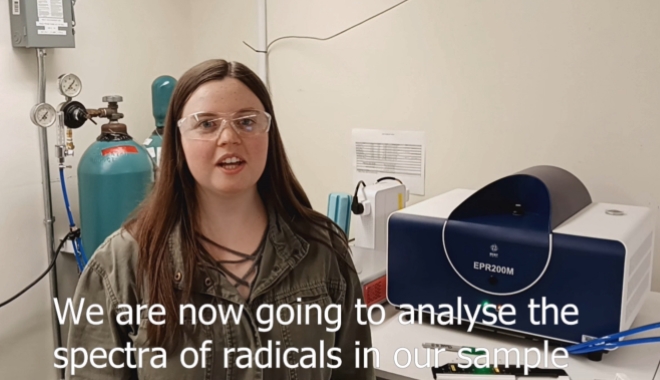
Cornell University Researchers Use CIQTEK ESR Spectrometer to Analyze the Spectrum of Free Radicals in Samples
Continuing with the previous research and article, Cornell University researcher - Jess Whittemore, used a demonstration to show the process of capturing and quantifying free radicals emitted from cigarettes to investigate the harmful effects of free radicals which in addition to tars may lead to cancer.   To analyze the spectra of free radicals in samples, she used the benchtop ESR spectrometer developed by CIQTEK.   As she described "The CIQTEK benchtop spectrometer is rather compact which is a great advantage for using in all kinds of laboratory. But beyond that it has remarkable sensitivity for our ESR studies. For this reasons we believe that this benchtop ESR spectrometer by CIQTEK is the best on the market. "    
High-level Research Publications with CIQTEK EPR Spectroscopy
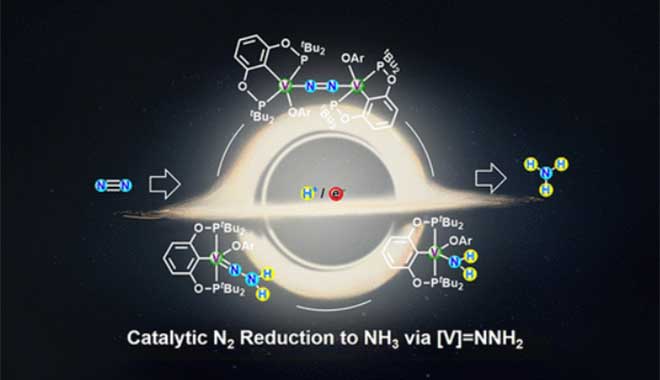
We are pleased to announce that the CIQTEK EPR spectroscopy has contributed to over 100 high-level research publications! (The list is shown below in Section #2) Section 1. One of the Selected Results    Vanadium-Catalyzed Dinitrogen Reduction to Ammonia via a [V]═NNH2 Intermediate.Journal of the American Chemical Society (2023) Wenshuang Huang, Ling-Ya Peng, Jiayu Zhang, Chenrui Liu, Guoyong Song, Ji-Hu Su, Wei-Hai Fang, Ganglong Cui, and Shaowei Hu   Abstract The Earth's atmosphere is rich in N2 (78%), but the activation and conversion of nitrogen have been challenging due to its chemical inertness. The ammonia industry uses high-temperature and high-pressure conditions to convert N2 and H2 to NH3 on the surface of solid catalysts. Under ambient conditions, certain microorganisms can bind and convert N2 to NH3 via Fe(Mo/V)-based nitrogen fixation enzymes. Although great progress has been made in the structure and intermediates of nitrogen fixation enzymes, the nature of N2 binding to the active site and the detailed mechanism of N2 reduction remains uncertain. Various studies on the activation of N2 with transition metal complexes have been carried out to better understand the reaction mechanism and to develop catalysts for ammonia synthesis under mild conditions. However, the catalytic conversion of N2 to NH3 by transition metal complexes remains challenging. Despite the crucial role of vanadium in biological nitrogen fixation, few well-defined vanadium complexes can catalyze the conversion of N2 to NH3. In particular, the V(NxHy) intermediates obtained from the proton/electron transfer reactions of ligated N2 remain unknown. Herein, this paper reports the vanadium metal complex-catalyzed reduction of nitrogen to ammonia and the first isolation and characterization of a neutral hydrazide complex intermediate ([V]=NNH2) from a nitrogen-activated system, with the cyclic conversion process simulated by the reduction of the protonated vanadium amino complex ([V]-NH2) to obtain a dinitrogen compound and release of ammonia. These findings provide unprecedented insights into the mechanism of N2 reduction associated with FeV nitrogen-fixing enzymes by combining theoretical calculations to elucidate the possible conversion of nitrogen to ammonia via the distal pathway in this catalytic system.   The group of Prof. Dr. Shaowei Hu at Beijing Normal University is dedicated to the development of transition metal complexes for the activation of inert small molecules. Recently, in collaboration with Prof. Dr. Ganglong Cui's group, we reported the reduction of nitrogen to ammonia catalyzed by vanadium metal complexes through a combination of theoretical calculations and experimental studies. The results of this study were published in the Journal of the American Chemical Society, and Wenshang Huang (M.S. student) and Lingya Peng (Ph. D. student) were the co-first authors of t...
Learn More
Leave A Message
Submit
Top

Leave A Message

Leave A Message
Please feel free to contact us for more details, request a quote or book an online demo! We will reply you as soon as we can.
Submit

Home

Products

Chat

contact