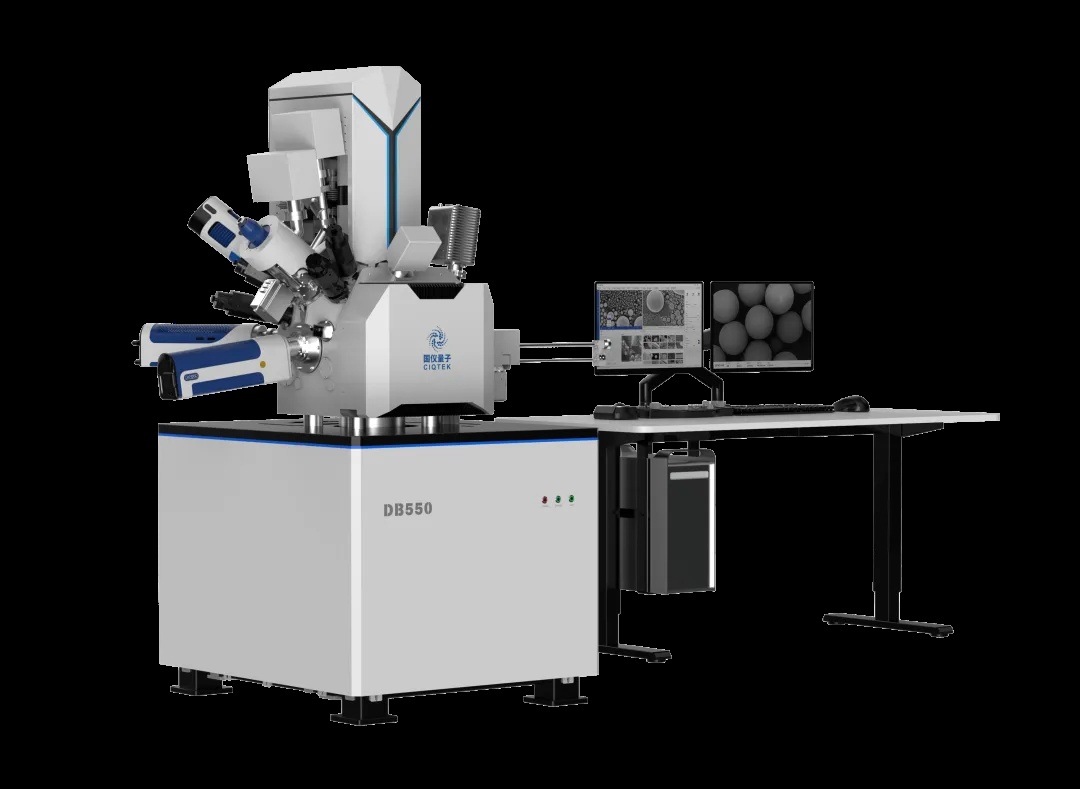
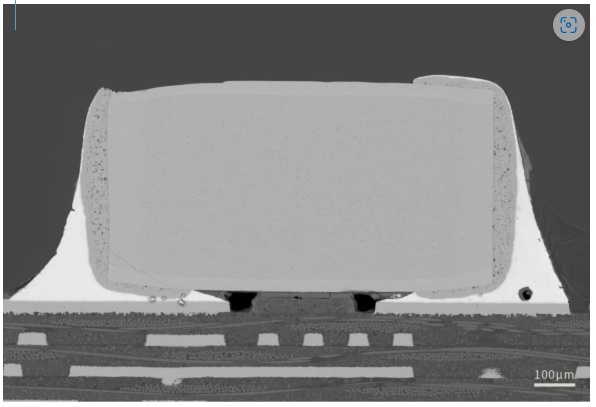
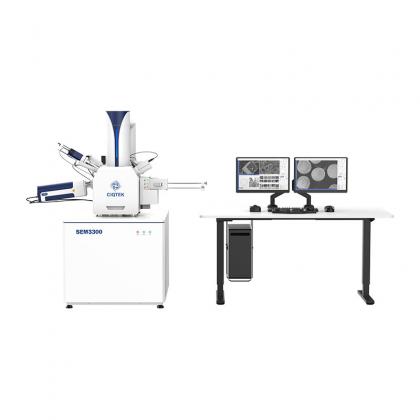
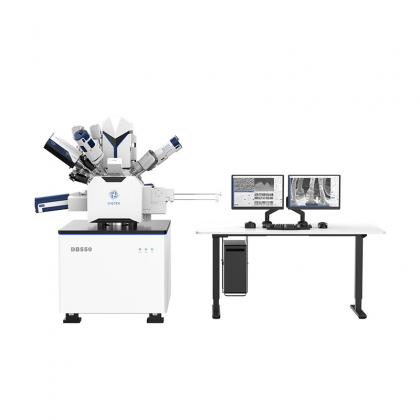
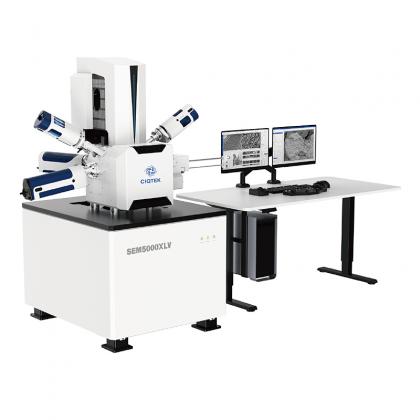
A Winning Team: SEM + FIB, the "Golden Combination" CIQTEK brings SEM and FIB together as a powerful team, providing critical support for PCB process optimization, reliability verification, and root cause determination of failures. SEM High-Resolution Imaging: The "Microscope" for Surface Details The SEM uses a high-resolution electron beam to capture crisp images of PCB surface morphology. It reveals solder pad plating, intermetallic compounds, micro-cracks, tin whiskers, and foreign particle contamination with exceptional clarity. Coupled with energy-dispersive X-ray spectroscopy (EDS), the SEM also performs elemental analysis on microscopic regions. This combination lets engineers identify the chemical signature of defects, making it straightforward to spot issues like short circuits, open circuits, corrosion, and plating anomalies. FIB Nanoscale Cutting: The "Scalpel" for Internal Structures While the SEM excels at surface imaging, the FIB takes over when you need to see what is happening inside the board. Using a nanometer-precision ion beam, the FIB performs targeted cross-sectioning at the exact defect location. It prepares ultra-thin slices through multi-layer boards, blind vias, and buried vias, exposing internal structures that mechanical sectioning simply cannot reach. Think of the FIB as a microscopic surgical tool. It removes material with nanometer accuracy, leaving a clean cross-section ready for imaging and analysis. CIQTEK Semiconductor Showcase: See It in Action The Beauty of the Microscopic World, Revealed in Every Detail. Here are real examples of CIQTEK electron microscopes in PCB cross-section observation: Solder Joint Interface Panorama Low magnification observation of capacitor overall morphology, viewing the real microscopic structure of the capacitor solder joint interface from the inside IMC Layer Evaluation Evaluating interlayer bonding, measuring IMC thickness and uniformity, detecting voids, cracks, and interface defects Multi-Layer Board Inner Structure Clear observation of IMC layer morphology, thickness, continuity, and density at the solder pad and solder interface Process Reliability Evaluation Evaluating trace pattern, thickness, etching quality and copper-to-substrate bonding, detecting line shift, etch defects, delamination, voids, and analyzing plating layer quality for PCB process control and reliability assessment Built for Labs That Demand Reliability CIQTEK develops its electron microscopy platforms from the ground up, covering core algorithms through hardware design. This vertical integration ensures consistent performance and long-term supply stability, which matters for labs running continuous production or multi-year research programs. The company backs its instruments with responsive technical support and regular software updates, helping users keep their systems running efficiently over time. Get in Touch If you are evaluating SEM or FIB systems for ...
View MoreTemperature is not just an environmental setting in electron paramagnetic resonance (EPR) spectroscopy. It is a core experimental parameter, right up there with microwave power and magnetic field range. Choose the right temperature, and you unlock sharper signals, stronger sensitivity, and structural details that room-temperature measurements simply cannot reveal. Choose wrong, and your signal may disappear entirely. This guide walks through the physics of variable-temperature EPR and helps you pick the right setup for your samples. Why Temperature Matters So Much in EPR Every EPR experiment involves three questions. How does temperature reshape the microscopic spin environment? How does it affect spectral interpretation? And which systems absolutely require variable-temperature measurements? Let us break it down. Cooling: The Simplest Way to Boost Sensitivity The EPR signal comes from a simple fact. Unpaired electrons occupy two spin energy levels, and the difference in population between those levels is what we detect. In an external magnetic field B0, electron spins undergo Zeeman splitting, creating two levels with ms = +1/2 and ms = -1/2. The energy gap between them is: The Boltzmann distribution governs how electrons populate these levels. The population ratio depends on temperature in a very direct way: Here is what this means in practice. The EPR signal intensity is proportional to the population difference between the two levels. That difference scales as 1/T. In other words, lower the temperature, and your signal gets stronger. Period. Temperature is an independent, fully controllable variable, so cooling your sample is the most fundamental and direct way to boost absolute sensitivity in EPR spectroscopy. EPR spectra of a weak coal sample measured at different temperatures. Lower temperatures deliver dramatically stronger signals. (Measured on CIQTEK EPR system.) Cooling Slows Relaxation, Revealing Hidden Signals Temperature does not just affect signal strength. It also controls spin relaxation, which determines whether you can detect a signal at all. Relaxation in magnetic resonance falls into two categories. Spin-lattice relaxation (T1). This is the process where excited spins exchange energy with the surrounding crystal lattice. It is highly temperature-sensitive. At room temperature, lattice vibrations are vigorous. Excited spins dissipate their energy quickly, so T1 is short. Cool the system down, and you effectively "freeze" those lattice vibrations. T1 lengthens dramatically. Spin-spin relaxation (T2). This arises mainly from magnetic dipolar interactions between neighboring spins. It is less directly affected by temperature. Spin-lattice relaxation rate as a function of temperature. The strong temperature dependence shows why cooling is essential for short-relaxation systems. (Ref: Phys. Chem. Chem. Phys., 2020, 22, 15751-15758) T2 controls the spectral linewidth. The homogeneous linewidth is inversely proportional...
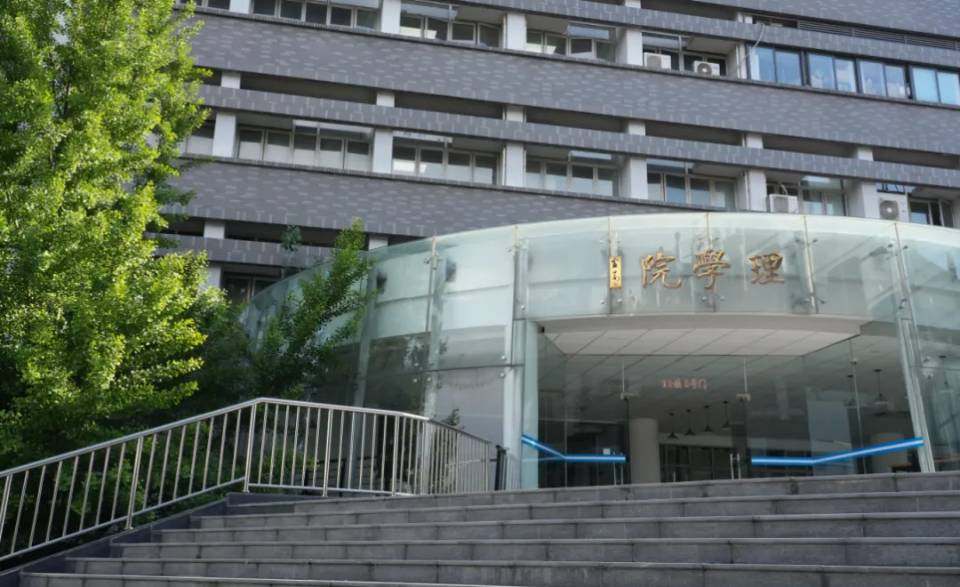
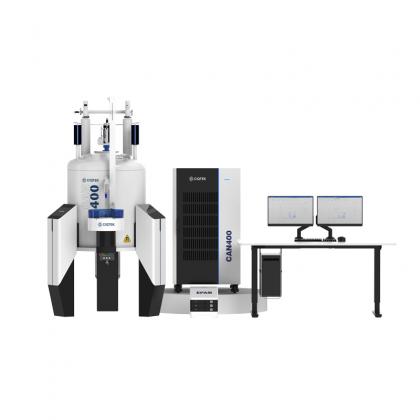
View MoreCIQTEK CAN400 NMR Spectrometer Becomes a Trusted Research Partner at China Pharmaceutical University Some NMR labs are busy. And then there are labs like the one at China Pharmaceutical University, where the instruments run around the clock, bookings stretch past midnight, and the sample queue fills every available slot. In that kind of environment, the instrument at the center of it all has to deliver. Clean spectra, day after day. No downtime. And it has to be simple enough for graduate students to run on their own during those late-night shifts. At China Pharmaceutical University (CPU), the CIQTEK CAN400 NMR spectrometer has met all of these demands. After nearly a year of continuous, high-volume operation, it has become a workhorse in the university's testing platform. It handles over 100 samples per day. It has maintained a zero-failure record. And perhaps most importantly, the researchers who rely on it say the data looks great. In this article, we will walk through how CPU selected the CAN400, how it has held up in one of the busiest academic NMR labs around, and why the day-to-day details matter just as much as the numbers on a spec sheet. Why NMR Spectroscopy Sits at the Heart of Pharmaceutical Research To understand why CPU needed a dependable NMR system, it helps to know what kind of institution this is. China Pharmaceutical University sits at the foot of Zhongshan Mountain, along the Yangtze River in Nanjing. It was founded over eighty years ago, and it has built a reputation as one of the top schools for pharmaceutical research and education in China. The university's pharmacy program earned an A+ rating in China's most recent national discipline evaluation. Its medicinal chemistry program has been ranked first in China and third globally, with a long history of producing influential research in drug design, molecular synthesis, and bioactive compound modification. At the heart of all this is organic chemistry. Every new drug candidate starts as a molecule that someone has to design, synthesize, and then characterize. That is where NMR spectroscopy comes in. For medicinal chemists, NMR is not a nice-to-have tool. It is the primary method for confirming molecular structures, assessing purity, and collecting the analytical data that supports publications and patent filings. So it is no surprise that the NMR lab at CPU is one of the busiest places on campus. The spectrometers run twenty-four hours a day. Students and faculty carry NMR tubes in and out of the lab at all hours. For countless research projects, the NMR spectrum is the first real data point that tells a researcher whether their synthesis worked. It is the bridge between an idea and a verified result. Given this workload, the university needed an instrument that could keep up. Solid technical performance. Continuous operation without issues. And it had to be easy enough for anyone to use, from first-year grad students to senior faculty. The College of Science building ...
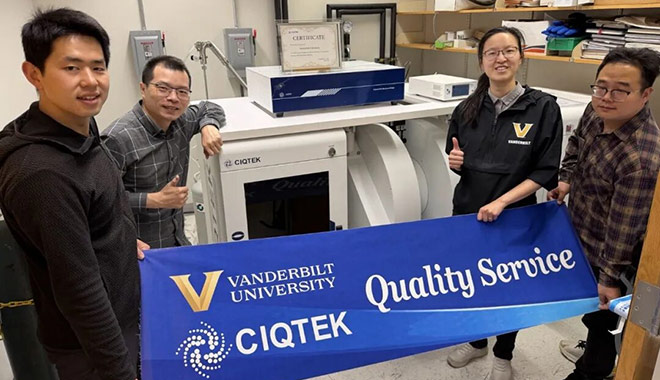
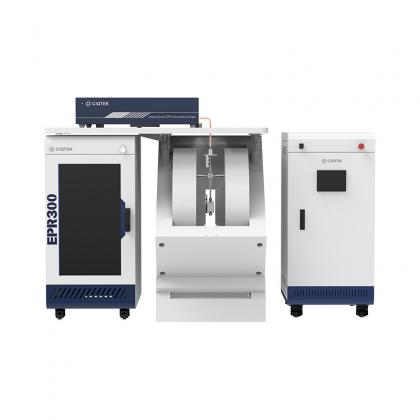
View MoreCIQTEK, a global leader in precision measurement and advanced scientific instrumentation, announces that its EPR product line has reached a significant milestone: the 300th global delivery. The landmark 300th unit — a CIQTEK EPR300 Electron Paramagnetic Resonance (EPR) spectrometer — has been officially delivered to Vanderbilt University in the United States, underscoring the growing global adoption of CIQTEK's EPR technology. CIQTEK EPR Team at the EPR300 Installation Site Inside Vanderbilt University — CIQTEK's EPR Technology Supports Advanced Research Founded in 1873 and located in Nashville, Tennessee, Vanderbilt University is a world-renowned private research university recognized for its strong academic and research excellence in chemistry, materials science, biomedical engineering, and nanotechnology. The research group receiving the EPR300 — the 300th unit in the CIQTEK EPR series — is dedicated to cutting-edge investigations in bioinorganic chemistry and advanced molecular materials, demanding the highest standards in electron paramagnetic resonance technology. With its superior sensitivity and signal-to-noise ratio, the CIQTEK EPR300 provides the critical data foundation that drives the group’s advanced research forward. Performance That Speaks for Itself — Client Proactively Publishes Delivery News Following installation and commissioning, the EPR300's outstanding spectral quality and the professionalism of CIQTEK's engineering team exceeded the client’s expectations. The research group published a dedicated news article on its official platform, celebrating the installation and offering high praise for the EPR spectrometer. “The performance of the EPR300 has been truly impressive,” said Assistant Professor Mengshan Ye, a lead researcher in the group. “And the dedication and professionalism demonstrated by the installation engineers have given our entire team tremendous confidence.” X-Band Continuous-Wave Electron Paramagnetic Resonance Spectrometer The EPR300 leverages a state-of-the-art microwave system and ultra-high-performance signal processing unit to push detection sensitivity and signal-to-noise ratio to unprecedented levels. Capable of precisely capturing and analyzing unpaired electron signals at extremely low spin concentrations, the EPR300 opens new methodological pathways for studying low-concentration free radicals and investigating the deep-level physical and chemical properties of metal ions and other microscopic systems. In addition, the EPR300 supports the upgrade to Q-band operation, enabling higher g-value resolution critical for detecting anisotropic samples. From life sciences and materials science to chemistry and physics, the EPR300 lays a robust experimental foundation for frontier research across multiple disciplines — empowering scientists to reach new milestones of discovery. 300 Deliveries and Counting ...
View MoreCIQTEK recently wrapped up an intensive two-day training program at the University of Science and Technology of China (USTC). By combining deep-dive theory with hands-on practice, our team helped nearly 60 researchers move beyond just "using" electron microscopes to truly mastering them for advanced semiconductor research. Bridging the Gap Between Technology and Discovery At CIQTEK, we believe that high-end scientific instruments are only as powerful as the hands that operate them. Recently, our Customer Success team visited the Integrated Circuit Experiment Center at USTC. Our mission was simple: to take the complexity out of Scanning Electron Microscopy (SEM) and provide researchers with the practical skills they need to push the boundaries of micro-scale observation. This "Service-First" initiative brought together about 60 students and faculty members for a deep dive into the world of precision microscopy. Moving from Theory to Mastery A great experiment starts with a solid understanding of the "why" behind the "how." The training was structured into a dual-track model: comprehensive theory followed by intensive group practice. In the classroom, our Customer Success Manager, Zhang Jing, broke down complex concepts into easy-to-digest insights. The sessions covered everything from the basic physics of electron beams to advanced parameter optimization. Specifically, we focused on: The Fundamentals: How SEM works and its core functional applications. Optimization: Tweaking key parameters to get the sharpest possible data. Semiconductor Focus: Specific characterization techniques tailored for integrated circuit research. By simplifying the "hardcore" technical knowledge, we ensured every participant had a rock-solid foundation before they ever touched the equipment. Hands-on Teaching with a Human Touch The real magic happened during the practical sessions. We know that reading a manual is never the same as actually running a scan. That is why our team moved into the lab for "shoulder-to-shoulder" teaching. During the small-group workshops, we guided participants through the entire workflow: Sample Preparation: The crucial first step for any successful scan. Machine Operation: Getting comfortable with the CIQTEK hardware interface. Image Analysis: Learning how to interpret what you are seeing. Troubleshooting: Identifying and fixing common issues on the fly. This one-on-one approach meant we could correct mistakes in real-time and answer specific questions as they popped up. The result? A noticeable jump in operating efficiency and a lot of happy researchers who now feel confident working with our instruments. A Full-Cycle Commitment to Your Research CIQTEK’s roots are in the academic world, and we feel a deep responsibility to give back to the scientific community. Our philosophy is built on "Achieving Customer Success." For us, the relationship does not end when an instrument is delivered; t...
View MoreThe energy was intense. The snow was flying. The crowd was electric. As part of our Winter Olympics 2026 story, CIQTEK invited our Italian partner Media System Lab to attend the competition at Livigno Snow Park as our special on-site representative. They were there in person. Right at the venue. Capturing the atmosphere, the emotion, and the unforgettable moments from the 2026 Winter Olympics. It was powerful. And it reminded us why the Olympic spirit matters far beyond sports. When Science Meets the Olympic Spirit At CIQTEK, we develop advanced scientific instruments, including SEM, NMR, EPR, BET systems, etc. Our work supports researchers who spend years chasing answers that most people never see. Scientific progress is not instant. It takes patience. It takes resilience. It takes the willingness to refine and improve again and again. That is why the scientific spirit aligns so naturally with the Olympic spirit. Both are about: Relentless improvement Long-term commitment Precision and control Teamwork across borders At Livigno Snow Park, our partner Media System Lab witnessed elite athletes pushing their physical limits. Back in laboratories around the world, scientists push technological and intellectual limits every day. Different fields. Same mindset. CIQTEK and Media System Lab: Partnership in Action Global innovation depends on trusted partnerships. CIQTEK's collaboration with Media System Lab reflects our belief that strong local partners create a stronger global impact. While athletes represent their nations on the slopes, our partners represent shared values in science and technology. Together, we build something bigger than any single company. Why This Moment Matters for CIQTEK Being part of the Winter Olympics 2026 story through Livigno Snow Park is meaningful for us. It represents connection. Connection between science and sport.Connection between Italy and the global research community.Connection between ambition and achievement. The athletes compete for gold.Scientists compete against the unknown. Both inspire us to aim higher. The competitions will end. The medals will be awarded. The crowds will go home. But the spirit continues. At CIQTEK, we carry that energy forward. Into our labs. Into our engineering teams. Into every collaboration around the world. Because excellence is not a moment. It is a mindset. A group photo of the CIQTEK mascot, Matteo from the MS lab, and the Winter Olympics mascot
View MoreThe value of scientific instruments goes beyond "buying the equipment"; it’s about using it well. On January 22, the CIQTEK "Care & Innovation" service team visited the Analysis and Testing Center at South China Normal University (SCNU) for an in-depth, specialized service activity. Led by Senior Application Engineer Hongyan Shen and Senior Service Engineer Dong Wang, the expert team conducted a full-scale instrument inspection and provided customized advanced EPR training, supporting research in physics, chemistry, and materials science. Their professional service is helping accelerate cutting-edge research in the Greater Bay Area. Safeguarding Critical Research Instruments SCNU's Analysis and Testing Center is a key platform for high-level research, handling multi-disciplinary analysis and testing tasks. The CIQTEK EPR spectrometer installed at the center is a core instrument for analyzing material microstructures and monitoring free radical dynamics, operating under heavy research workloads. To ensure the instrument remains at peak performance, the CIQTEK team responded promptly and dispatched a "service + application" expert duo. They focused on daily maintenance challenges and advanced application needs, providing dual-layer support for instrument stability and efficient utilization. In-Depth Inspection: Equipment Health is the First Line of Defense "Stable operation is essential for reliable data." Upon arrival, Senior Service Engineer Dong Wang and the team immediately performed a meticulous instrument health check. They inspected the magnet system and water cooling, calibrated all key parameters, and maintained low-temperature accessories, following CIQTEK's standard operating procedures (SOPs). The team also provided preventive maintenance advice to ensure long-term "zero-fault" operation, giving researchers confidence for ongoing and future experiments. Customized Advanced Training: Bridging Theory and Practice Hardware maintenance strengthens research, while application training strengthens scientific insight. Senior Application Engineer Hongyan Shen delivered a highly practical, custom advanced EPR training to SCNU staff and students. The training addressed key research directions, including photocatalysis, material defect analysis, and advanced oxidation studies, combining theory and hands-on practice. Shen covered EPR principles, experimental details, parameter optimization, sample testing, and complex spectrum analysis, providing case-based explanations tailored to real research scenarios. Students and staff actively engaged in discussions, following practical demonstrations and one-on-one problem solving. The session translated abstract theory into immediately usable lab techniques, earning high praise from the center. Professional Service Recognized, Empowering High-Quality Research SCNU faculty commented: "CIQTEK’s service response is fast and highly profes...
View MoreCIQTEK EASY-H 2420 high temperature and high pressure gas adsorption analyzer has been successfully delivered and installed for Saudi Aramco, marking another milestone in CIQTEK's growing cooperation with global energy research leaders. The project moved smoothly from factory acceptance to on-site installation, and the customer expressed strong satisfaction with both the instrument performance and CIQTEK's professional support throughout the process. Successful Installation in Saudi Arabia Customer Visit and Factory Acceptance in Hefei Before shipment, experts from Saudi Aramco visited CIQTEK headquarters in Hefei, China, to personally conduct the factory acceptance test of the EASY-H 2420 system. During the visit, the customer team worked closely with CIQTEK engineers to review system performance, run tests, and experience the instrument operation firsthand. The discussions were productive and practical, covering application needs, workflow optimization, and future cooperation opportunities. The Aramco team praised the instrument stability and ease of operation, as well as the professionalism and responsiveness of CIQTEK's technical team. The smooth acceptance process helped ensure the system was ready for shipment with confidence. Successful Installation in Saudi Arabia In February 2026, the system was successfully installed and commissioned at the customer site in Saudi Arabia. CIQTEK engineers provided installation support and user training, helping local operators quickly become comfortable with the system. Following installation, the customer reported that the instrument performance met expectations, and they appreciated CIQTEK’s fast response, professional guidance, and smooth coordination throughout the delivery process. The project reflects CIQTEK’s commitment not only to reliable instrument design, but also to strong global service support and customer collaboration. About Saudi Aramco Saudi Aramco is the national petroleum and natural gas company of Saudi Arabia and one of the world's largest integrated energy and chemicals companies. Aramco plays a major role in global energy supply and continuously invests in advanced technologies to improve efficiency and sustainability in energy production and research. The deployment of advanced adsorption analysis tools supports ongoing materials and energy research activities within the organization. About CIQTEK Gas Adsorption Solutions CIQTEK provides a full range of gas adsorption and pore structure analysis instruments supporting research and industrial applications in energy, materials science, catalysis, and porous materials development. The product portfolio includes: • High-pressure and high-temperature adsorption analyzers, such as the EASY-H series, designed for advanced gas adsorption research under realistic operating conditions. • Surface area and pore size analyzers, widely used for BET analysis and routine mate...
View More
No. 1969, Kongquetai Road, High-tech Zone, Hefei, Anhui, China
+8615156059133
+8613083191369
info@ciqtek.com
Sitemap | XML | Blog | Privacy Policy | IPv6 network supported