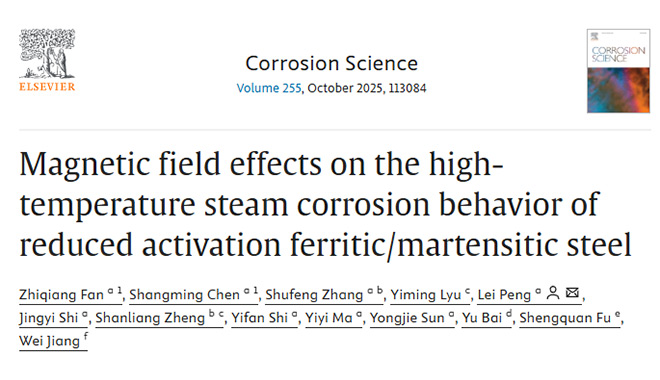
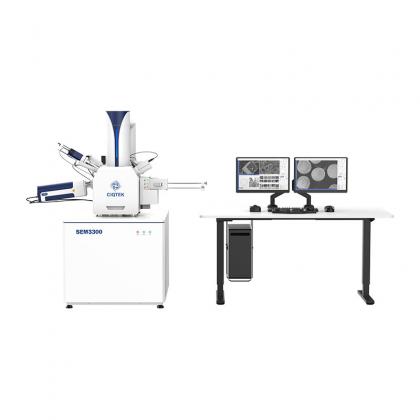
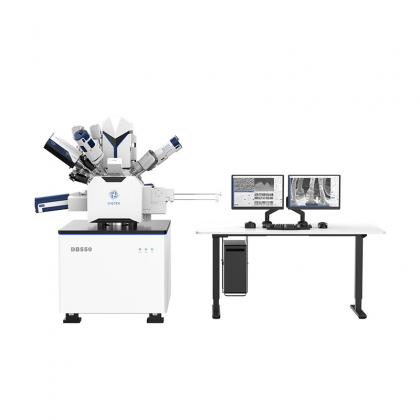
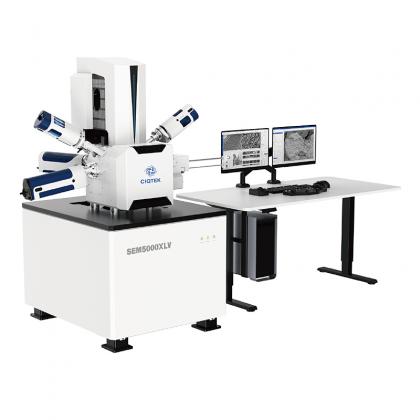
Nuclear fusion is considered a key future energy source due to its high efficiency and clean energy output. In fusion reactors, water cooling systems are widely used because they are technically mature, cost-effective, and have excellent cooling performance. However, a major challenge remains: under high temperature and high pressure, water and steam strongly corrode structural materials. While this problem has been studied in fission reactors, fusion environments are more complex. The unique high-intensity, unevenly distributed magnetic fields in fusion devices interact with corrosion processes, creating new technical challenges that need detailed research. To address this, Associate Professor Peng Lei's team from the University of Science and Technology of China conducted an in-depth study using the CIQTEK scanning electron microscope (SEM) and dual-beam electron microscope. They built high-temperature magnetic-field steam corrosion and high-temperature water corrosion setups. Using SEM, EBSD, and FIB techniques, they analyzed oxide films formed on CLF-1 steel after 0–300 hours of steam corrosion at 400°C under 0T, 0.28T, and 0.46T magnetic fields, and after 1000 hours of high-temperature water corrosion at 300°C. The study used CIQTEK SEM5000X ultra-high-resolution field-emission SEM and the FIB-SEM DB500 The study found that the oxide films form a multilayer structure, with a chromium-rich inner layer and an iron-rich outer layer. Film formation occurs in five stages: initial oxide particles, then floc-like structures, formation of a dense layer, growth of spinel structures on the dense layer, and finally, spinel cracking into laminated oxides. The presence of a magnetic field significantly accelerates corrosion, promotes the transformation of outer magnetite (Fe₃O₄) into hematite (Fe₂O₃), and enhances laminated oxide formation. This work was published in Corrosion Science, a top-tier journal in the field of corrosion and materials degradation, under the title: "Magnetic field effects on the high-temperature steam corrosion behavior of reduced activation ferritic/martensitic steel." Surface Oxide Film Characterization In high-temperature steam (HTS), CLF-1 steel surfaces show different corrosion states over time. On polished surfaces, early-stage oxidation (60 h) appears as small, dispersed particles. The Fe/Cr ratio is similar to the substrate, indicating that the oxide layer is not yet complete. By 120 h, floc-like oxides appear. At 200 h, a dense oxide layer forms, with new oxide particles and local spinel structures on top. Rough surfaces corrode faster. Early floc-like oxides are finer and more evenly distributed. By 200 h, they transform into spinel structures, showing a stronger difference from polished surfaces. In high-temperature, high-pressure water (HTPW), polished surfaces display similar spinel structures. Spinel in HTPW is denser and more numerous, while spinel in HTS is larger in size....
View MoreWith the rapid expansion of new energy, mining, metallurgy, and electroplating industries, nickel pollution in water bodies has become a growing threat to environmental quality and human health. During industrial processes, nickel ions often interact with various chemical additives to form highly stable heavy-metal organic complexes (HMCs). In nickel electroplating, for example, citrate (Cit) is widely used to improve coating uniformity and brightness, but the two carboxyl groups in Cit readily coordinate with Ni²⁺ to form Ni–Citrate (Ni-Cit) complexes (logβ = 6.86). These complexes significantly alter nickel’s charge, steric configuration, mobility, and ecological risks, while their stability makes them challenging to remove with conventional precipitation or adsorption methods. Currently, "complex dissociation" is regarded as the key step in removing HMCs. However, typical oxidation or chemical treatments suffer from high cost and complicated operation. Therefore, multifunctional materials with both oxidative and adsorptive capabilities offer a promising alternative. Researchers from Beihang University, led by Prof. Xiaomin Li and Prof. Wenhong Fan, used the CIQTEK scanning electron microscope (SEM) and electron paramagnetic resonance (EPR) spectrometer to conduct an in-depth investigation. They developed a new strategy using KOH-modified Arundo donax L. biochar to efficiently remove Ni-Cit from water. The modified biochar not only showed high removal efficiency but also enabled nickel recovery on the biochar surface. The study, titled “Removal of Nickel-Citrate by KOH-Modified Arundo donax L. Biochar: Critical Role of Persistent Free Radicals”, was recently published in Water Research. Material Characterization Biochar was produced from Arundo donax leaves and impregnated with KOH at different mass ratios. SEM imaging (Fig. 1) revealed: The original biochar (BC) exhibited a disordered rod-like morphology. At a 1:1 KOH-to-biomass ratio (1KBC), an ordered honeycomb-like porous structure was formed. At ratios of 0.5:1 or 1.5:1, pores were underdeveloped or collapsed. BET analysis confirmed the highest surface area for 1KBC (574.2 m²/g), far exceeding other samples. SEM and BET characterization provided clear evidence that KOH modification dramatically enhances porosity and surface area—key factors for adsorption and redox reactivity. Figure 1. Preparation and characterization of KOH-modified biochar. Performance in Ni-Cit Removal Figure 2. (a) Removal efficiency of total Ni by different biochars; (b) TOC variation during Ni–Cit treatment; (c) Effect of Ni–Cit concentration on the removal efficiency of 1KBC; (d) Effect of pH on the removal performance of 1KBC; (e) Influence of coexisting ions on Ni–Cit removal by 1KBC; (f) Continuous-flow removal performance of Ni–Cit by 1KBC. (Ni–Cit = 50 mg/L, biochar dosage = 1 g/L) Batch experiments de...
View MoreAluminum alloys, prized for their exceptional strength-to-weight ratio, are ideal materials for automotive lightweighting. Resistance spot welding (RSW) remains the mainstream joining method for automotive body manufacturing. However, the high thermal and electrical conductivity of aluminum, combined with its surface oxide layer, requires welding currents far exceeding those used for steel. This accelerates copper electrode wear, leading to unstable weld quality, frequent electrode maintenance, and increased production costs. Extending electrode life while ensuring weld quality has become a critical technological bottleneck in the industry. To address this challenge, Dr. Yang Shanglu's team at Shanghai Institute of Optics and Fine Mechanics conducted an in-depth study using the CIQTEK FESEM SEM5000. They innovatively designed a raised-ring electrode and systematically investigated the effect of ring number (0–4) on electrode morphology, revealing the intrinsic relationship between ring count, crystal defects in the weld nugget, and current distribution. Their results show that increasing the number of raised rings optimizes current distribution, improves thermal input efficiency, enlarges the weld nugget, and significantly extends electrode lifespan. Notably, the raised rings enhance oxide layer penetration, improving current flow while reducing pitting corrosion. This innovative electrode design provides a new technical approach for mitigating electrode wear and lays a theoretical and practical foundation for broader application of aluminum alloy RSW in the automotive industry. The study is published in the Journal of Materials Processing Tech. under the title “Investigating the Influence of Electrode Surface Morphology on Aluminum Alloy Resistance Spot Welding.” Raised-Ring Electrode Design Breakthrough Facing the electrode wear challenge, the team approached the problem from electrode morphology. They machined 0 to 4 concentric raised rings on the end face of conventional spherical electrodes, forming a novel Newton Ring electrode (NTR). Figure 1. Surface morphology and cross-sectional profile of the electrodes used in the experiment SEM Analysis Reveals Crystal Defects and Performance Enhancement How do raised rings influence welding performance? Using the CIQTEK FESEM SEM5000 and EBSD techniques, the team characterized the microstructure of weld nuggets in detail. They found that the raised rings pierce the aluminum oxide layer during welding, optimizing current distribution, influencing heat input, and promoting nugget growth. More importantly, the mechanical interaction between raised rings and molten metal significantly increases the density of crystal defects, such as geometrically necessary dislocations (GNDs) and low-angle grain boundaries (LAGBs), within the weld nugget. Optimal performance was observed with three raised rings (NTR3). Figure 2. EBSD analysis of weld nugget microstruct...
View MoreSolid-state lithium metal batteries (SSLMBs) are widely recognized as the next-generation power source for electric vehicles and large-scale energy storage, offering high energy density and excellent safety. However, their commercialization has long been limited by the low ionic conductivity of solid electrolytes and poor interfacial stability at the solid–solid interface between electrodes and electrolytes. Despite significant progress in improving ionic conductivity, interfacial failure under high current density or low-temperature operation remains a major bottleneck. A research team led by Prof. Feiyu Kang, Prof. Yanbing He, Assoc. Prof. Wei Lü, and Asst. Prof. Tingzheng Hou from the Institute of Materials Research, Tsinghua Shenzhen International Graduate School (SIGS), in collaboration with Prof. Quanhong Yang from Tianjin University, has proposed a novel design concept of a ductile solid electrolyte interphase (SEI) to tackle this challenge. Their study, entitled “A ductile solid electrolyte interphase for solid-state batteries”, was recently published in Nature. CIQTEK FE-SEM Enables High-Resolution Interface Characterization In this study, the research team utilized the CIQTEK Field Emission Scanning Electron Microscope (SEM4000X) for microstructural characterization of the solid–solid interface. CIQTEK’s FE-SEM provided high-resolution imaging and excellent surface contrast, enabling researchers to precisely observe the morphology evolution and interfacial integrity during electrochemical cycling. Ductile SEI: A New Pathway Beyond the "Strength-Only" Paradigm Traditional inorganic-rich SEIs, though mechanically stiff, tend to suffer from brittle fracture during cycling, leading to lithium dendrite growth and poor interfacial kinetics. The Tsinghua team broke away from the “strength-only” paradigm by emphasizing “ductility” as a key design criterion for SEI materials. Using the Pugh’s ratio (B/G ≥ 1.75) as an indicator of ductility and AI-assisted screening, they identified silver sulfide (Ag₂S) and silver fluoride (AgF) as promising inorganic components with superior deformability and low lithium-ion diffusion barriers. Building on this concept, the researchers developed an organic–inorganic composite solid electrolyte containing AgNO₃ additives and Ag/LLZTO (Li₆.₇₅La₃Zr₁.₅Ta₀.₅O₁₂) fillers. During battery operation, an in-situ displacement reaction transformed the brittle Li₂S/LiF SEI components into ductile Ag₂S/AgF layers, forming a gradient “soft-outside, strong-inside” SEI structure. This multi-layered design effectively dissipates interfacial stress, maintains structural integrity under harsh conditions, and promotes uniform lithium deposition. Figure 1. Schematic illustration of the component screening and functional mechanism of the ductile SEI during solid-state battery cycling. Figure 2. Structur...
View MoreRecently, the 2025 Nobel Prize in Chemistry was awarded to Susumu Kitagawa, Richard Robson, and Omar Yaghi in recognition of “their development of metal–organic frameworks (MOFs).” The three laureates created molecular structures with enormous internal spaces, allowing gases and other chemical species to flow through them. These structures, known as Metal–Organic Frameworks (MOFs), have applications ranging from extracting water from desert air and capturing carbon dioxide, to storing toxic gases and catalyzing chemical reactions. Metal–Organic Frameworks (MOFs) are a class of crystalline porous materials formed by metal ions or clusters linked via organic ligands (Figure 1). Their structures can be envisioned as a three-dimensional network of “metal nodes + organic linkers,” combining the stability of inorganic materials with the design flexibility of organic chemistry. This versatile construction allows MOFs to be composed of almost any metal from the periodic table and a wide variety of ligands, such as carboxylates, imidazolates, or phosphonates, enabling precise control over pore size, polarity, and chemical environment. Figure 1. Schematic of a Metal–Organic Framework Since the first permanent-porosity MOFs appeared in the 1990s, thousands of structural frameworks have been developed, including classic examples like HKUST-1 and MIL-101. They exhibit ultrahigh specific surface areas and pore volumes, offering unique properties for gas adsorption, hydrogen storage, separation, catalysis, and even drug delivery. Some flexible MOFs can undergo reversible structural changes in response to adsorption or temperature, showing dynamic behaviors such as “breathing effects.” Thanks to their diversity, tunability, and functionalization, MOFs have become a core topic in porous materials research and provide a solid scientific foundation for studying adsorption performance and characterization methods. MOFs Characterization The fundamental characterization of MOFs typically includes powder X-ray diffraction (PXRD) patterns to determine crystallinity and phase purity, and nitrogen (N₂) adsorption/desorption isotherms to validate the pore structure and calculate apparent surface area. Other commonly used complementary techniques include: Thermogravimetric Analysis (TGA): Evaluates thermal stability and can estimate pore volume in some cases. Water Stability Tests: Assesses structural stability in water and across different pH conditions. Scanning Electron Microscopy (SEM): Measures crystal size and morphology, and can be combined with energy-dispersive X-ray spectroscopy (EDS) for elemental composition and distribution. Nuclear Magnetic Resonance (NMR) Spectroscopy: Analyzes overall sample purity and can quantify ligand ratios in mixed-ligand MOFs. Inductively Coupled Plasma Optical Emission Spectroscopy (ICP-OES): Determines sample purity and elemental ratios. Diffuse Reflect...
View MoreWith the acceleration of industrialization and the continuous growth of pollutant emissions, organic wastewater poses a serious threat to ecosystems and human health. Statistics show that energy consumption from industrial wastewater treatment accounts for 28% of global water treatment energy use. However, conventional Fenton technology suffers from catalyst deactivation, leading to low treatment efficiency. Metal-based catalysts in advanced oxidation processes face common bottlenecks: the redox cycling process cannot be effectively sustained, electron transfer pathways are restricted, and traditional preparation methods rely on high temperature and high pressure with yields of only 11–15%. To address these challenges, a research team from Dalian University of Technology developed a Cu-C nanocatalyst by directionally coupling commercial cellulose with copper ions using a wet-chemical galvanic replacement method. They further established a novel degradation system featuring a dual-channel catalytic mechanism (radical pathway + direct electron transfer) and broad pH adaptability. The material achieved 65% tetracycline degradation within 5 minutes (vs. <5% by commercial catalysts), with copper ion leaching below 1.25 mg/L (lower than the national standard of 2.0 mg/L). In a packed-bed reactor (PTR), over 99% pollutant removal was achieved within a residence time of only 20 seconds. By enabling sustained catalytic activity through the direct electron transfer pathway, this approach overcame the long-standing issue of poor environmental adaptability in traditional catalysts. The study, entitled “Robust dual-channel catalytic degradation relying on organic pollutants via Cu-C composites with directional electron harvest and classical radical species generation”, was published in Chemical Engineering Journal. Cu-C Nanocatalyst Formation Using commercial cellulose as the support, the team incorporated copper ions via a wet-chemical galvanic replacement method to construct Cu-C nanocomposites with dual-channel catalytic activity. Characterizations revealed unique electron transfer effects under various conditions. SEM imaging (CIQTEK SEM5000) revealed the microstructural evolution: pristine cellulose exhibited a disordered network, which, after composite formation, transformed into 10 nm copper spheres that self-assembled into 100 nm hierarchical aggregates. This structure ensured high dispersion and electron transport. SEM-EDS confirmed uniform element distribution. FTIR spectra revealed a Cu₂O peak at 682.31 cm⁻¹ due to redox reactions during synthesis. The presence of C=C, C=O, and C–H groups further supported the findings, while a strong –OH peak was observed at 3200–3600 cm⁻¹. XPS analysis indicated that Cu 2p signals were primarily from Cu₂(OH)₂CO₃ and Cu₂O, with C 1s showing C=C and C–C bonds, consistent with FTIR results. Figure 1. Preparation and Characterization of the C...
View MoreAt Ningbo University’s Institute of Intelligent Medicine and Biomedical Engineering, researchers are tackling real-world medical challenges by merging materials science, biology, medicine, information technology, and engineering. The Institute has quickly become a hub for wearable and remote healthcare innovations, advanced medical imaging, and intelligent analysis, intending to turn lab breakthroughs into real clinical impact. Pushing the Frontiers of Bioprinting with CIQTEK SEM Recently, Dr. Lei Shao, Executive Vice Dean of the Institute, shared highlights of his research journey and how CIQTEK's cutting-edge SEM is fueling his team’s discoveries. CIQTEK SEM at Ningbo University’s Institute of Intelligent Medicine and Biomedical Engineering Printing the Future: From Miniature Hearts to Vascular Networks Since 2016, Dr. Shao has been pioneering biomanufacturing and 3D bioprinting, with the goal of engineering living, functional tissues outside the human body. His team’s work spans from 3D-printed miniature hearts to complex vascularized structures, with applications in drug screening, disease modeling, and regenerative medicine. A 3D-printed miniature heart Backed by funding from the National Natural Science Foundation of China and local research agencies, his lab has introduced several breakthroughs: Smart bioprinting strategies: Using fluid rope-coiling effects with coaxial bioprinting to fabricate microfibers with controlled morphology, enabling the creation of vascular organoids. Cryopreservable cell microfibers: Developing standardized, scalable, and cryopreservable cellular microfibers through coaxial bioprinting, with high potential for 3D cell culture, organoid fabrication, drug screening, and transplantation. Sacrificial bioinks: Printing mesoscopic porous networks using sacrificial microgel bioinks, building nutrient pathways for effective oxygen/nutrient delivery. Complex vascular systems: Constructing complex vascular networks with coaxial bioprinting while inducing in-situ endothelial cell deposition, solving challenges in vascularization of complex structures. Anisotropic tissues: Creating anisotropic tissues using shear-oriented bioinks and pre-shearing printing methods. High-cell-density constructs: Proposing an original liquid-particle support bath printing technique for high-cell-density bioinks, achieving lifelike bioactive tissues while overcoming the long-standing trade-off between printability and cell viability in extrusion-based bioprinting. These advances are paving the way toward functional, transplantable tissues, and potentially even engineered organs. Accelerating Discovery with CIQTEK SEM With science advancing rapidly, biomedical research stands at the forefront of innovation. Higher efficiency often leads to greater breakthroughs. According to Dr. Shao, scanning electron microscopy (SEM) is one of the most indispensable scientific instruments at the Institute. Since adopt...
View MoreRecently, a team led by Dr. Wang Haomin from the Shanghai Institute of Microsystem and Information Technology of the Chinese Academy of Sciences made significant progress in studying the magnetism of zigzag graphene nanoribbons (zGNRs) using a CIQTEK Scanning Nitrogen-vacancy Microscope (SNVM). Building on previous research, the team pre-etched hexagonal boron nitride (hBN) with metal particles to create oriented atomic trenches and used a vapor-phase catalytic chemical vapor deposition (CVD) method to controllably prepare chiral graphene nanoribbons in the trenches, obtaining ~9 nm wide zGNRs samples embedded in the hBN lattice. By combining SNVM and magnetic transport measurements, the team directly confirmed its intrinsic magnetism in experiments. This groundbreaking discovery lays a solid foundation for the development of graphene-based spin electronic devices. The related research findings, titled "Signatures of magnetism in zigzag graphene nanoribbons embedded in a hexagonal boron nitride lattice," have been published in the prestigious academic journal "Nature Materials". Graphene, as a unique two-dimensional material, exhibits magnetic properties of p-orbital electrons that are fundamentally different from the localized magnetic properties of d/f orbital electrons in traditional magnetic materials, opening up new research directions for exploring pure carbon-based magnetism. Zigzag graphene nanoribbons (zGNRs), potentially possessing unique magnetic electronic states near the Fermi level, are believed to hold great potential in the field of spin electronics devices. However, detecting the magnetism of zGNRs through electrical transport methods faces multiple challenges. For instance, nanoribbons assembled from the bottom up are often too short in length to reliably fabricate devices. Additionally, the high chemical reactivity of zGNR edges can lead to instability or uneven doping. Furthermore, in narrower zGNRs, the strong antiferromagnetic coupling of edge states can make it difficult to detect their magnetic signals electrically. These factors hinder direct detection of the magnetism in zGNRs. ZGNRs embedded in the hBN lattice exhibit higher edge stability and feature an inherent electric field, creating ideal conditions for detecting the magnetism of zGNRs. In the study, the team used CIQTEK's Room-Temperature SNVM to observe the magnetic signals of zGNRs directly at room temperature. Figure 1: Magnetic measurement of zGNR embedded in a hexagonal boron nitride lattice using Scanning Nitrogen-vacancy Microscope In electrical transport measurements, the fabricated approximately 9-nanometer-wide zGNR transistors demonstrated high conductivity and ballistic transport characteristics. Under the influence of a magnetic field, the device exhibited significant anisotropic magnetoresistance, with a magnetoresistance change of approximately 175 Ω at 4 K, a magnetoresistance ratio of about...
View More
No. 1969, Kongquetai Road, High-tech Zone, Hefei, Anhui, China
+8615156059133
+8613083191369
info@ciqtek.com
Sitemap | XML | Blog | Privacy Policy | IPv6 network supported