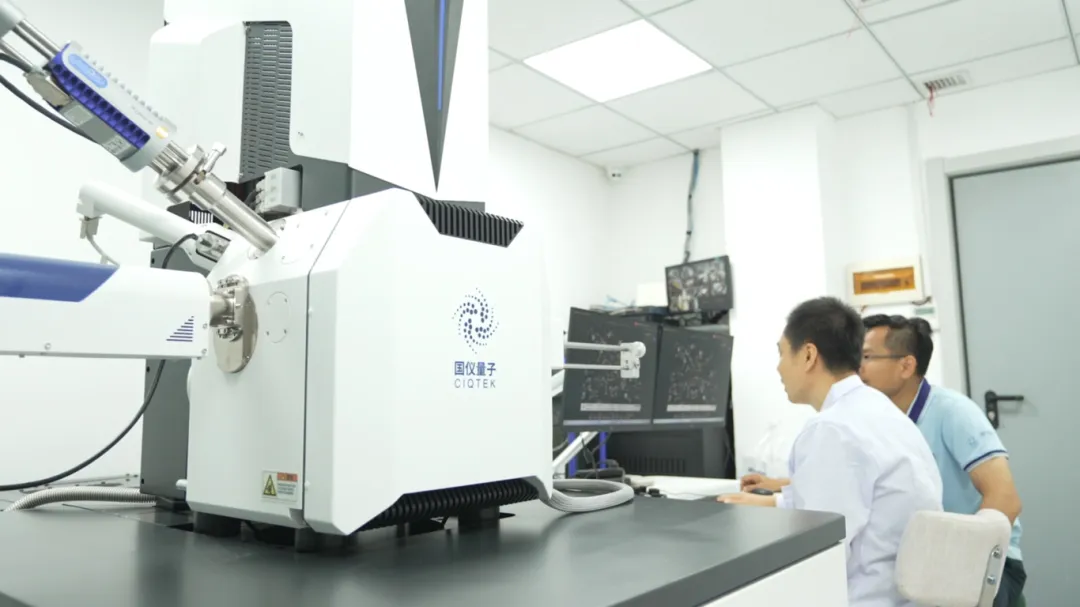
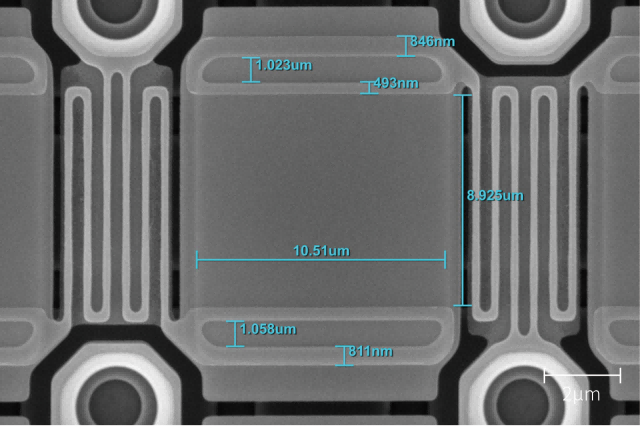
Sodium-ion batteries (SIBs) are attracting attention as a cost-effective alternative to lithium-ion batteries, thanks to the abundant sodium content in Earth’s crust (2.6% vs. 0.0065% for lithium). Despite this, SIBs still lag in energy density, highlighting the need for high-capacity electrode materials. Hard carbon is a strong candidate for SIB anodes due to its low sodium storage potential and high capacity. However, factors like graphite microdomain distribution, closed pores, and defect concentration significantly impact initial Coulombic efficiency (ICE) and stability. Modification strategies face limits. Heteroatom doping can raise capacity but reduce ICE. Traditional CVD helps form closed pores but suffers from slow methane decomposition, long cycles, and defect buildup. Professor Yan Yu’s team at the University of Science and Technology of China (USTC) utilized the CIQTEK Scanning Electron Microscope (SEM) to investigate the morphology of various hard carbon materials. The team developed a catalyst-assisted chemical vapor deposition (CVD) method to promote CH₄ decomposition and regulate the microstructure of hard carbon. Transition metal catalysts such as Fe, Co, and Ni effectively lowered the energy barrier for CH₄ decomposition, thereby improving efficiency and reducing deposition time. However, Co and Ni tended to cause excessive graphitization of the deposited carbon, forming elongated graphite-like structures in both lateral and thickness directions, which hindered sodium-ion storage and transport. In contrast, Fe facilitated appropriate carbon rearrangement, resulting in an optimized microstructure with fewer defects and well-developed graphite domains. This optimization reduced irreversible sodium storage, enhanced initial Coulombic efficiency (ICE), and increased the availability of reversible Na⁺ storage sites. As a result, the optimized hard carbon sample (HC-2) achieved an impressive reversible capacity of 457 mAh g⁻¹ and a high ICE of 90.6%. Moreover, in-situ X-ray diffraction (XRD) and in-situ Raman spectroscopy confirmed a sodium storage mechanism based on adsorption, intercalation, and pore filling. The study was published in Advanced Functional Materials under the title:Catalyst-Assisted Chemical Vapor Deposition Engineering of Hard Carbon with Abundant Closed Pores for High-Performance Sodium-Ion Batteries. As illustrated in Figure 1a, the hard carbon was synthesized via a catalyst-assisted chemical vapor deposition (CVD) method using commercial porous carbon as the precursor and methane (CH₄) as the feed gas. Figure 1d shows the adsorption energies of CH₄ and its dehydrogenated intermediates on metal catalysts (Fe, Co, Ni) and porous carbon surfaces, indicating that the introduction of metal catalysts lowers the energy barrier for CH₄ decomposition, with Fe being the most effective in promoting the breakdown of CH₄ and its intermediates. High-resolution TEM (HRTEM) images under differ...
View MoreProfessor Lai Yuekun’s team from Fuzhou University has conducted innovative research addressing the urgent demand for strong adhesive hydrogels in fields such as wearable sensors, soft robotics, tissue engineering, and wound dressings. Currently, interface adhesive materials face two major technical challenges: firstly, difficulty in achieving rapid and reversible switching between adhesive and non-adhesive states; secondly, poor adhesion performance in multi-liquid environments. Recently, the team conducted in-depth studies using the CIQTEK scanning electron microscope. The PANC/T hydrogel was synthesized from acrylamide (AAm), N-isopropylacrylamide (NIPAM), a micellar solution composed of sodium dodecyl sulfate/methyl octadecyl methacrylate/sodium chloride (SDS/OMA/NaCl), and phosphotungstic acid (PTA). Dynamic interactions between PNIPAM chains and SDS enabled on-demand adhesion and separation. Further soaking in Fe³⁺ solution produced the PANC/T-Fe hydrogel, which achieves strong adhesion in various wet environments. This resulted in the development of an intelligent interface adhesive hydrogel with rapid responsiveness, capable of controlled adhesion and separation under different humidity conditions. The research was published in Advanced Functional Materials under the title "Temperature-Mediated Controllable Adhesive Hydrogels with Remarkable Wet Adhesion Properties Based on Dynamic Interchain Interactions." Synthesis and Structural Characteristics of Controllable Adhesive Hydrogel PANC/T-Fe hydrogel is synthesized by copolymerization of hydrophilic AAm, amphiphilic NIPAM, and hydrophobic OMA. PTA acts as a crosslinker, forming hydrogen bonds with amino groups on polymer chains to establish a stable network. The team discovered that interactions between NIPAM and SDS are critical to the hydrogel’s temperature-sensitive adhesion. At lower temperatures, SDS crystallizes and adheres to PNIPAM chains, hindering adhesive functional groups from interacting with substrates and reducing adhesion. As temperature rises, SDS crystals melt, improving contact between adhesive groups and substrates and significantly increasing adhesion. PTA enhances adhesion at higher temperatures by physically interacting with polymer amino groups; this interaction weakens upon heating, softening the hydrogel and generating more adhesive sites. The dynamic regulation between polymer chains enables reversible, on-demand adhesion. Figure 1. Hydrogel synthesis and mechanism of reversible wet adhesion. Temperature Regulation Mechanism of Adhesion Performance Through comparative experiments, the team confirmed that the synergistic effect of NIPAM and the micellar solution is key to the hydrogel’s temperature-sensitive adhesion. Differential Scanning Calorimetry (DSC) results indicate the temperature response is unrelated to NIPAM’s Lower Critical Solution Temperature (LCST), but influenced by NIPAM-SDS int...
View MoreA Scanning Electron Microscope (SEM) is a powerful microscope that uses a high-energy electron beam to scan the surface of a specimen, capturing signals emitted or scattered by electrons to generate high-resolution images of the specimen surface. SEM can magnify images by thousands to tens of thousands of times, revealing a microscopic world that is imperceptible to the naked eye. Under the CIQTEK Scanning Electron Microscope, we can observe the fine textile structure of lizard skin cells, which allows for a visual examination of the structural characteristics of crystalline plates in the skin, such as their size, length, and arrangement. These images not only provide a visual feast but also offer crucial clues for scientists to interpret material properties, disease mechanisms, and biological tissue functions. Figures1. Ultrastructure of lizard skin/30 kV/STEM In the field of electron science, SEM helps engineers examine tiny solder joints and conductors on circuit boards in detail to ensure the precision and reliability of technology. In materials science, SEM can be used to analyze fracture surfaces of metal alloys, optimizing industrial design and processing technology. In biological applications, SEM can display the surface structure of bacteria and even observe interactions between viruses and host cells. Figures2. SEM3200/Ordinary chip2/10 kV/ETD SEM is not just a machine; it is more like a meticulous detective that helps us uncover the microscopic secrets in nature and man-made objects, providing strong support for scientific research and technological innovation. Through SEM, scientists can better understand the nature of materials, the structure of biological tissues, and the essence of various complex phenomena, pushing the boundaries of our knowledge forward. Common Misconceptions about SEM: 1. Are SEM images in true colors? SEM produces black and white images because they result from the interaction of electrons with the specimen, not from light waves. The colored SEM images typically seen are post-processed using digital coloring techniques to distinguish different structures or enhance visual effects. 2. Is higher magnification always better? While SEM can provide extremely high magnification, not all research requires maximum magnification. Excessive magnification beyond the specimen's feature scale not only increases scanning time but may also lead to an increase in irrelevant information. 3. Can SEM see atoms? Although SEM offers high resolution, it often cannot reach the level of observing individual atoms. To observe structures at the atomic scale, transmission electron microscopes (TEM) or scanning tunneling microscopes (STM) are typically needed. 4. Is SEM only suitable for solid and lifeless specimens? While SEM was initially designed for solid materials, modern techniques allow observation of biological specimens as w...
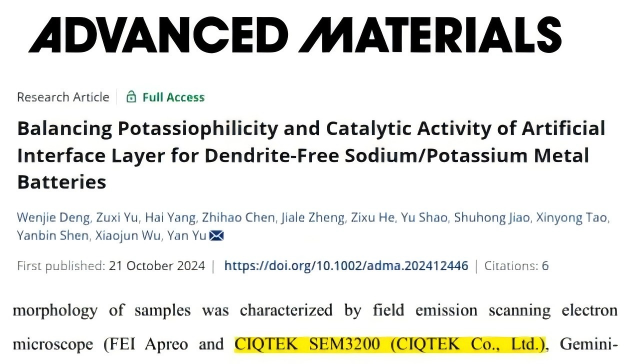
View MoreProfessor Yan Yu's team at USTC utilized the CIQTEK Scanning Electron Microscope SEM3200 to study the post-cycling morphology. It developed amorphous carbon with controllable defects as a candidate material for an artificial interface layer balancing potassiophilicity and catalytic activity. The research team prepared a series of carbon materials with different degrees of defects (designated as SC-X, where X represents the carbonization temperature) by regulating the carbonization temperature. The study found that SC-800 with excessive defects caused substantial electrolyte decomposition, resulting in an uneven SEI film and shortened cycle life. SC-2300, with the fewest defects, had insufficient affinity for potassium and easily induced potassium dendritic growth. SC-1600, which possessed a locally ordered carbon layer, exhibited an optimized defect structure, achieving the best balance between potassiophilicity and catalytic activity. It could regulate the electrolyte decomposition and form a dense and uniform SEI film. The experimental results demonstrated that SC-1600@K exhibited long-term cycle stability for up to 2000 hours under a current density of 0.5 mA cm-2 and a capacity of 0.5 mAh cm-2. Even under higher current density (1 mA cm-2) and capacity (1 mAh cm-2), it maintained excellent electrochemical performance with stable cycles exceeding 1300 hours. In full-cell testing, when paired with a PTCDA positive electrode, it maintained 78% capacity retention after 1500 cycles at a current density of 1 A/g, demonstrating outstanding cycle stability. This research, titled "Balancing Potassiophilicity and Catalytic Activity of Artificial Interface Layer for Dendrite-Free Sodium/Potassium Metal Batteries," was published in Advanced Materials. Figure 1: The microstructure analysis results of carbon samples (SC-800, SC-1600, and SC-2300) prepared at different carbonization temperatures are presented. Through techniques such as X-ray diffraction (XRD), Raman spectroscopy, X-ray photoelectron spectroscopy (XPS), and wide-angle X-ray scattering (WAXS), the crystal structure, defect level, and oxygen and nitrogen doping of these samples were analyzed. The results showed that as the carbonization temperature increased, the defects in the carbon materials gradually decreased, and the crystal structure became more orderly. Figure 2: The current density distribution during potassium metal growth on different composite negative electrodes was analyzed using finite element simulation. The simulation results showed that the SC-1600@K composite electrode exhibited a uniform current distribution during potassium deposition, which effectively suppressed dendritic growth. Additionally, the Young's modulus of the SEI layer was measured using atomic force microscopy (AFM), and the results showed that the SEI layer on the SC-1600@K electrode had a higher modulus, indicating its stronger firmness and inhib...
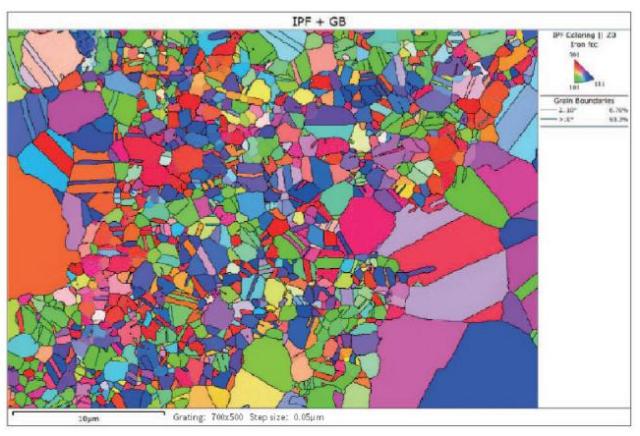
View MoreElectron Backscatter Diffraction (EBSD) is a widely used microscopy technique in material science. It analyzes the angles and phase differences of the backscattered electrons produced when a sample interacts with a high-energy electron beam to determine key characteristics such as crystal structure and grain orientation. Compared to a traditional Scanning Electron Microscope (SEM), EBSD provides higher spatial resolution and can obtain crystallographic data at the sub-micrometer level, offering unprecedented details for analyzing material microstructures. Characteristics of the EBSD Technique EBSD combines the microanalysis capabilities of Transmission Electron Microscope (TEM) and the large-area statistical analysis capabilities of X-ray diffraction. EBSD is known for its high-precision crystal structure analysis, fast data processing, simple sample preparation process, and the ability to combine crystallographic information with microstructural morphology in material science research. SEM equipped with an EBSD system not only provides micro-morphology and composition information but also enables microscopic orientation analysis, greatly facilitating the work of researchers. Application of EBSD in SEM In SEM, when an electron beam interacts with the sample, various effects are generated, including the diffraction of electrons on regularly arranged crystal lattice planes. These diffractions form a "Kikuchi pattern," which not only contains information about the symmetry of the crystal system but also directly corresponds to the angle between crystal planes and crystallographic axes, with a direct relationship to the crystal system type and lattice parameters. This data can be used to identify crystal phases using the EBSD technique, and for known crystal phases, the orientation of the Kikuchi pattern directly corresponds to the orientation of the crystal. EBSD System Components To perform EBSD analysis, a set of equipment including a Scanning Electron Microscope and an EBSD system is required. The core of the system is the SEM, which produces a high-energy electron beam and focuses it on the sample surface. The hardware part of the EBSD system usually includes a sensitive CCD camera and an image processing system. The CCD camera is used to capture the backscattered electron images, and the image processing system is used to perform pattern averaging and background subtraction to extract clear Kikuchi patterns. Operation of the EBSD Detector Obtaining EBSD Kikuchi patterns in SEM is relatively simple. The sample is tilted at a high angle relative to the incident electron beam to enhance the backscattered signal, which is then received by a fluorescent screen connected to a CCD camera. The EBSD can be observed directly or after amplification and storage of the images. Software programs can calibrate the patterns to obtain crystallographic information. Modern EBSD systems can achieve ...
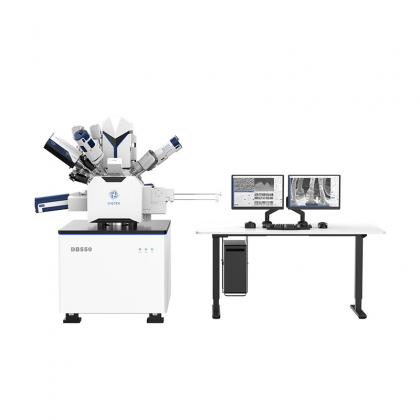
View MoreFocused Ion Beam (FIB) technology has become an essential part of modern technological advancements, particularly in semiconductor manufacturing and nanofabrication. While FIB technology is well-known, its history and development are not widely known. Focused Ion Beam (FIB) is a micro-cutting instrument that uses electromagnetic lenses to focus an ion beam into a very small area. FIB involves accelerating ions from an ion source (most FIBs use Ga, but some devices have He and Ne ion sources) and then focusing the beam onto the surface of the sample. CIQTEK DB550 Focused Ion Beam Scanning Electron Microscope (FIB-SEM) Origin of FIB Technology Since the 20th century, nanotechnology has rapidly developed as an emerging field in science and technology. Currently, nanotechnology represents one of the forefront areas of scientific and technological advancement and has significant implications for economic and social development as a national strategy. Nanostructures have unique properties due to their structural units approaching the coherence length of electrons and the wavelength of light, leading to surface and interfacial effects, size effects, and quantum size effects. They exhibit many novel characteristics in electronics, magnetism, optics, and mechanics, and hold enormous potential in high-performance device applications. The development of novel nanoscale structures and devices requires the advancement of precise, multidimensional, and stable micro-nanofabrication techniques. Micro-nanofabrication processes are extensive and commonly involve techniques such as ion implantation, photolithography, etching, and thin film deposition. In recent years, with the trend of miniaturization in modern manufacturing processes, Focused Ion Beam (FIB) technology has increasingly been applied in fabricating micro-nano structures in various fields, becoming an indispensable and important technique in micro-nanofabrication. FIB technology is developed based on conventional ion beam and focused electron beam systems and is essentially the same. Compared to electron beams, FIB scans the sample surface using an ion beam generated by an ion source after acceleration and focusing. Since ions have much greater mass than electrons, even the lightest ions, such as H+ ions, are more than 1800 times the mass of electrons. This enables the ion beam to not only achieve imaging and exposure capabilities similar to electron beams but also utilize the ion's heavy mass to sputter atoms from solid surfaces, making it a direct processing tool. FIB can also induce atoms to deposit onto the sample material surface by combining with chemical gases. Therefore, FIB is a widely applicable tool in micro-nanofabrication. Development of Ion Sources In the development of FIB technology, the advancement of high-brightness ion sources has been crucial. Early gas ion sources and Liquid Metal Ion Sources (LMIS) laid the foundation for FIB technolo...
View MoreCreating a perfect image requires a combination of theoretical knowledge and practical experience, and a balance between many factors. This process may encounter some challenging issues in the use of the Electron Microscope. Astigmatism Astigmatism is one of the most difficult corrections to make in an image and requires practice. The middle image in the following figure is a correctly focused image after astigmatism correction. The left and right images are examples of poor astigmatism correction, resulting in stretched stripes in the image. To achieve precise imaging, the cross-section of the Electron Beam (probe) should be circular when it reaches the specimen. The cross-section of the probe may become distorted, forming an elliptical shape. This can be caused by a series of factors, such as machining accuracy and defects in the magnetic pole piece or copper winding in the casting of the ferromagnetic coil. This deformation is called vignetting and can result in difficulties in focusing. Severe astigmatism is one of the most difficult corrections to make in an image and requires practice. The middle image in the following figure is a correctly focused image after astigmatism correction. The left and right images are examples of poor astigmatism correction, resulting in stretched stripes in the image. can manifest as "stripes" in the X direction in the image. As the image transitions from under-focus to over-focus, the stripes will change to the Y direction. When the focus is precise, the stripes disappear, and proper focusing can be achieved if the spot size is appropriate. When magnified around 10,000 times, if there are no stripes in either direction when the objective is adjusted to under-focus or over-focus, it is generally considered that there is no astigmatism in the image. Astigmatism is usually negligible in images below 1000 times magnification. The best approach to correct vignetting is to set the X and Y vignetter offsets to zero (i.e., no astigmatism correction) and then focus the specimen as finely as possible. Then adjust the X or Y astigmatism control (cannot be adjusted simultaneously) to obtain the best image and refocus. Edge Effects Edge effects occur due to enhanced Electron Emission at the edges of the specimen. The edge effects are caused by the influence of morphology on the generation of secondary electrons and are also the reason for the image contour produced by the secondary electron detector. Electrons preferentially flow towards the edges and peaks and emit from the edges and peaks, resulting in lower signal intensity in areas obstructed by the detector, such as recesses. Backscattered electrons emitted from the region of the sample facing the detector also enhance the topographic contrast. Reducing the accelerating voltage can reduce edge effects. Charging Effects Uncontrolled discharge of electrons th...
View MoreFocused Ion Beam (FIB) is a microfabrication instrument that utilizes an electron lens to focus an ion beam into a very small size for precision cutting. Working Principle Liquid Metal Ion Source The ion source is the heart of the FIB system, and the accurate focusing of the ion beam begins with the emergence of liquid metal ion sources. The ions generated by liquid metal ion sources, mostly utilizing gallium (Ga) as the metal material, have high brightness and petite source sizes. Liquid metal ion sources are formed by the field-induced ion emission from a liquid metal surface under a strong electric field. In the manufacturing process of the source, a tungsten wire with a diameter of about 0.5 mm is electrochemically etched to create a tungsten needle with a tip diameter of only 5-10 μm. The molten liquid metal is then adhered to the tip of the tungsten needle. Under the application of a strong electric field, the liquid metal forms a tiny tip (Taylor cone) due to the electric field force, with an electric field intensity of up to 10^10 V/m. Under such a high electric field, metal ions on the liquid surface evaporate into an ion beam through field evaporation. Despite the low ion current of only a few microamperes, the current density can reach approximately 106 A/cm2, and the brightness is about 20 μA/sr. Focused Ion Beam System Focused ion beam technology utilizes electrostatic lenses to focus the ion beam into a very small size for microfabrication. Commercial FIB systems typically extract the particle beam from liquid metal ion sources. Gallium (Ga) is often used as a metal material due to its low melting point, low vapor pressure, and good oxidation resistance. By applying an external electric field (Suppressor) to the top of the ion column, a small tip of the liquid metal or alloy can be formed. With the negative electric field (Extractor) applied, the tip of the metal or alloy is pulled out to generate the ion beam. The ion beam is then focused using electrostatic lenses, and the size of the ion beam can be controlled by an Automatic Variable Aperture (AVA) with an adjustable aperture. The desired ion species are selected using an E×B mass analyzer. Finally, the ion beam is focused on the specimen and scanned using an octupole deflector and an objective lens. The ion beam bombards the specimen, and the secondary electrons and ions generated are collected, imaged, or used for physical sputtering, cutting, or grinding. Basic Functions The basic functions of a focused ion beam microscope can be divided into four categories: 1. Precisional Cutting: Achieving cutting through the physical collision of ions. Widely used in Cross-Section processing and analysis of Integrated Circuits (ICs) and LCDs. 2. Selective Deposition: Decomposing organic metal vapor or gas-phase insulating material with the energy of the ion beam to locally deposit conductive or non-conductive ...
View More
No. 1969, Kongquetai Road, High-tech Zone, Hefei, Anhui, China
+8615156059133
+8613083191369
info@ciqtek.com
Sitemap | XML | Blog | Privacy Policy | IPv6 network supported