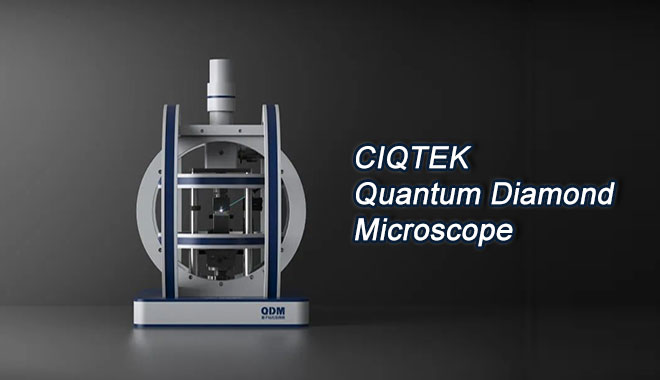
From September 27th to 28th, the "China Scanning Probe Microscopy Symposium (SPM2019)" hosted by Anhui General University Key Laboratory of Precision Scientific Instruments, and co-organized by CIQTEK was held in the Expert Building in Hefei, Anhui, China. Group Photo of SPM2019 From the 1990s to 2012, the China SPM Symposium has been successfully held for twelve sessions, playing an important role in the progress of science and technology and the development of high-tech industries. At the opening ceremony of the conference, Vice President Luo Xisheng talked about the development history and status of scanning probe microscopy. He also emphasized the original purpose and importance of this conference, hoping to promote communication and exchange between experts and scholars through this conference, and wished the conference a complete success. SPM2019 Site Experts and scholars from well-known universities and research institutions such as Peking University and the Chinese University of Hong Kong, as well as many global scanning probe microscope instrument developers, gathered to conduct academic exchanges on SPM scientific research results and industrialization development. The conference provided a platform for academic exchange. The attending experts shared their academic achievements in the field of SPM in recent years and discussed the new trends in the future development of SPM together. During the conference, 14 invited presentations, 17 oral presentations, and 2 enterprise presentations were made by experts and scholars on five topics, including "SPM-related fundamental theories and simulation methods", "SPM instrumentation technology progress", "SPM important applications", "SPM standardization" and "product promotion of domestic and foreign SPM manufacturers". CIQTEK CEO Dr. Yu He made the report As a co-organizer of the conference and a developer of scientific instruments related to SPM, Dr. Yu He, CEO of CIQTEK, attended the conference and gave a presentation on "Development and Engineering of Scanning NV Microscope (SNVM)". CIQTEK also brought its Scanning NV Microscope to the exhibition site of this conference and made a comprehensive introduction and demonstration to the participants. Li Bingjiang, director of CIQTEK marketing department, introduced the Scanning NV Microscope (SNVM) on site CIQTEK Scanning NV Microscope (SNVM) CIQTEK SNVM is a scanning NV center microscope based on diamond nitrogen-vacancy center (NV center) and AFM scanning imaging technology. The magnetic properties of the sample are obtained quantitatively and non-destructively by control and readout of the spin state in the diamond probe. Based on the NV diamond magnetometry and mechanics, SNVM has nanoscale spatial resolution and ultra-high detection sensitivity and can be used to develop and study magnetic textures, high-density magnetic storage...
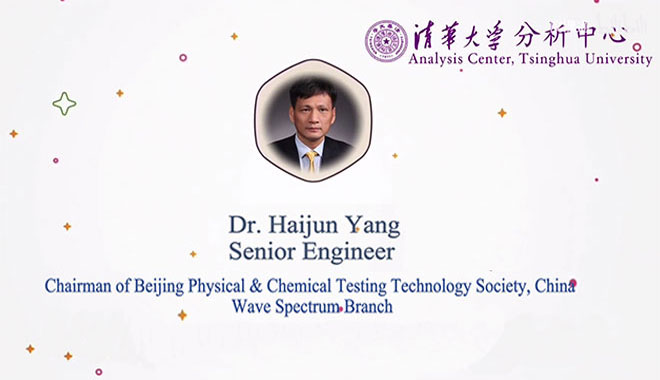
In December, CIQTEK received a special gift, a thanks banner from the Magnetic Resonance Laboratory of Tsinghua University Analysis Center. A thanks banner is a traditional way to show thanks and gratitude in China. In November 2019, an electron paramagnetic resonance (EPR or ESR) spectroscopy in the Magnetic Resonance Laboratory of Tsinghua University's Analysis Center failed to measure the signal. After the discussions, the team decided to ask CIQTEK team for help. As the company with advanced EPR (ESR) spectroscopy technology, CIQTEK has the strength of independent research and development of EPR (ESR) instruments and professional service & support team. After arranging for engineers to visit the site, the EPR spectroscopy in the MR lab was able to detect the signal again after troubleshooting and maintenance. According to the feedback from the magnetic resonance laboratory of Tsinghua University Analysis Center, the same test conditions of manganese standard signal was the same as before the repair after the end of the repair and turn-on test (Figure 1); restart the instrument, the test was normal (Figure 2); adjust the field amplitude increased to five times, the signal intensity expanded to about five times (Figure 2); the manganese standard signal could be measured at different modulation frequencies. A fullerenes sample, the test is normal. It is reported that the EPR (ESR) spectroscopy was unable to measure the signal due to the damage of the modulation field system. For such problems, the CIQTEK EPR (ESR) engineers took only 4 working days from on-site inspection to restoration of the test, which greatly relieved the testing pressure in the laboratory and met the testing needs of the students and teachers. Since its inception, CIQTEK has been committed to helping our customers more efficiently promote the development of technology and explore the future of mankind. We take "first-class products, first-class service" as our aim, and always insist on customer first. Establishing excellent brand service is our constant pursuit. The Magnetic Resonance Laboratory of Tsinghua University Analytical Center wrote in the banner, "The maintenance work of EPR spectroscopy is professional, timely and reliable, setting standards for instrument industry." CIQTEK is honored to receive such high praise, and will continue to work hard and contribute to the revitalization of the high-end scientific instrument industry. Tsinghua University Analysis Center The Department of Analytical Chemistry at Tsinghua University was established in 1926 as one of the key "specialties" at the beginning of the Department of Chemistry. "In 1985, Tsinghua University resumed the establishment of the Department of Chemistry, and the former Analytical Chemistry Department and Tsinghua University Analytical Center were integrated into an entity combining teaching, research, and service. Note...
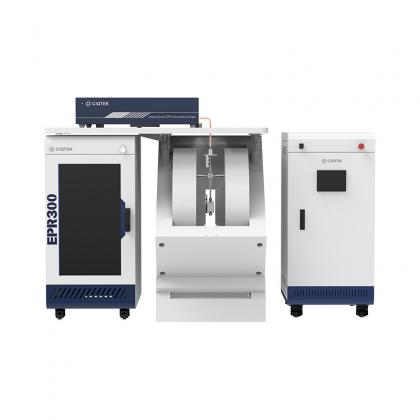
Key Findings and Value at a Glance Understanding how intrinsically disordered proteins interact with biological membranes is a long-standing challenge in biophysics. In a recent study published in Biophysical Chemistry (2026, 329:107550), Dr. Yann Fichou and his team at the University of Bordeaux, France, developed a robust quantitative EPR spectroscopy method to directly measure Tau protein–lipid interactions. Their approach does not rely on indirect probes or relative fluorescence signals, enabling precise, absolute quantification of both free and membrane-bound protein populations. Using the CIQTEK EPR200M benchtop X-band EPR spectrometer, the team quantitatively resolved the binding behavior of Tau protein to negatively charged lipid membranes, extracted absolute concentrations of free and bound protein populations, and determined binding affinity with minimal experimental input. This work not only reveals key mechanistic insights into Tau–membrane interactions, but also demonstrates the power of CW EPR for quantitative analysis in complex biological systems. Background: Why Quantifying Protein–Lipid Interactions Is So Difficult Protein–lipid interactions play a central role in cellular signaling, membrane organization, and the aggregation of pathological proteins. In neurodegenerative diseases such as Alzheimer’s disease, the interaction between Tau protein and cellular membranes is believed to be a critical early event that triggers pathological aggregation. Despite its importance, quantitative characterization of these interactions remains challenging. Biological membranes are heterogeneous, dynamic, and highly sensitive to experimental conditions. The interactions themselves are often weak, transient, and involve multiple conformational states. Conventional methods such as fluorescence or colorimetric assays typically provide relative signals and require calibration curves that introduce additional uncertainty. EPR spectroscopy offers a fundamentally different approach. By directly probing the dynamics of spin-labeled molecules, quantitative EPR provides a sensitive and accurate window into molecular motion, binding, and conformational restriction, enabling precise determination of protein–lipid interactions. From Spectral Line Shapes to Molecular Binding Dynamics Tau is an intrinsically disordered protein, and its interaction with lipid membranes involves subtle changes in molecular mobility rather than large structural rearrangements. This makes CW EPR particularly well suited to the problem. Tau protein was site-specifically labeled using site-directed spin labeling (SDSL). Continuous-wave EPR spectra were acquired on the CIQTEK EPR200M at room temperature and 150 K while increasing the concentration of POPS multilamellar vesicles (MLVs). Free Tau shows a narrow, symmetric three-line spectrum corresponding to rapid isotropic motion (τc ≈ 0.383 ns), characteristic of int...