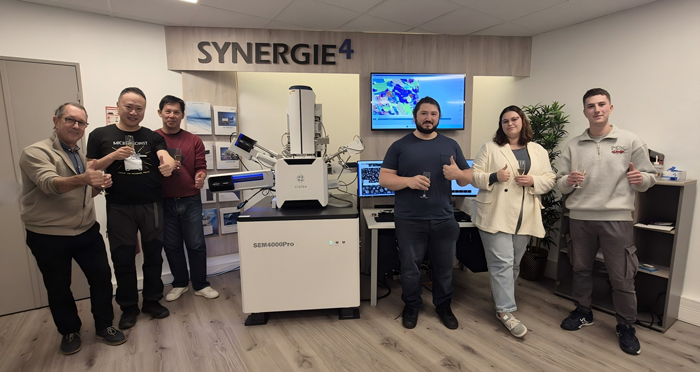
The new setup allows researchers and industrial users in Europe to experience high-resolution imaging, analytical performance, and ease of operation offered by the CIQTEK SEM4000Pro. The system provides outstanding image quality for fine microstructural observation and supports a wide range of applications in materials science, microelectronics, and R&D.
SYNERGIE4 is CIQTEK's French distributor and service provider for advanced microscopy and microanalysis solutions. With extensive experience in electron microscopy and analytical instruments, SYNERGIE4 supports universities, research institutes, and industrial labs across France with tailored solutions, technical expertise, and training.
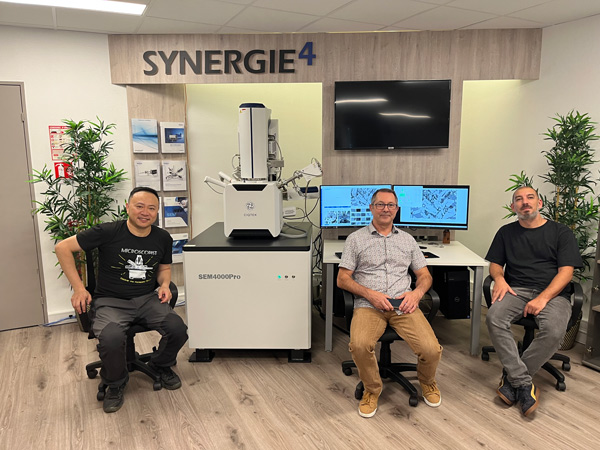
Now, SYNERGIE4’s demo center features a fully operational CIQTEK SEM4000Pro, offering hands-on demonstrations for visitors to explore its imaging capabilities, intuitive software interface, and versatility across various research fields.
“Having the CIQTEK SEM4000Pro available in our showroom allows us to showcase its imaging performance directly to our customers,” said a representative from SYNERGIE4. “It’s a great addition to our demonstration facilities and an important step in expanding our microscopy portfolio.”
With the SEM4000Pro now available in France, European users can directly evaluate its performance, supported by SYNERGIE4’s local expertise and technical demonstration services. This collaboration marks a significant milestone in CIQTEK’s ongoing effort to enhance accessibility to advanced electron microscopy technologies across Europe.
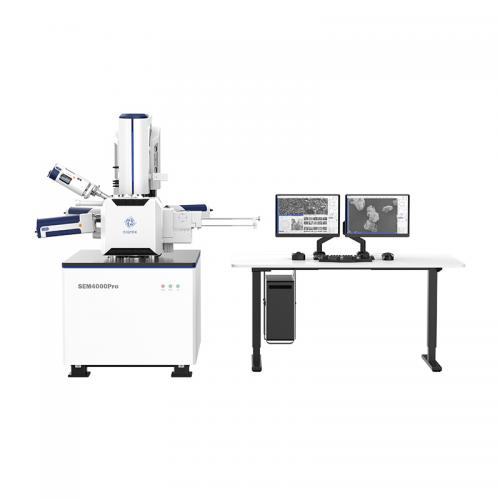
Analytical Schottky Field Emission Scanning Electron Microscope (FESEM) CIQTEK SEM4000Pro is an analytical FE-SEM model equipped with a high-brightness and long-life Schottky field emission electron gun. Its three-stage electromagnetic lens design offers significant advantages in analytical applications such as EDS / EDX, EBSD, WDS, and more. The model comes standard with a low-vacuum mode and high-performance low-vacuum secondary electron detector, as well as a retractable backscattered electron detector, which benefits the observation of poorly conductive or non-conductive specimens.