How to Use EPR Technology to Evaluate Edible Oil Quality
From rich peanut oil to fragrant olive oil, edible vegetable oils enrich our diets and provide diverse nutritional benefits. With rising living standards and increasing oil consumption, ensuring the quality and safety of edible oils has become critical.

EPR technology offers unique advantages: no sample pretreatment, non‑destructive, in‑situ, and highly sensitive. It is increasingly used in edible oil quality monitoring.
EPR can detect unpaired electrons in oil molecules, which are early markers of oxidation.
Oil oxidation is essentially a free radical chain reaction, producing radicals such as ROO·, RO·, and R·.
By identifying these radicals, EPR allows scientific evaluation of oxidation level and stability before visible or sensory changes appear.
This early detection is critical for preventing degradation caused by light, heat, oxygen exposure, or metal catalysts. Unsaturated fatty acids are particularly prone to oxidation, even at room temperature, which affects flavor, nutrition, and shelf life.
Benefits of using EPR for oil stability:
Ensures safer, fresher edible oil for consumers.
Guides effective antioxidant use.
Supports quality control in oil‑containing foods.
Extends product shelf life.
Thus, EPR technology provides a direct, sensitive, and non‑destructive approach to monitor edible oil quality, safeguarding public health.
These radicals are highly reactive and short-lived, so spin trapping is often used.
Spin trapping agents (like PBN) react with unstable radicals to form stable radical adducts that EPR can detect reliably.
During each step of production, the free radical concentration can be measured, and the gradual changes in oxidation can be tracked. This allows for a precise determination of the product’s antioxidant capacity.
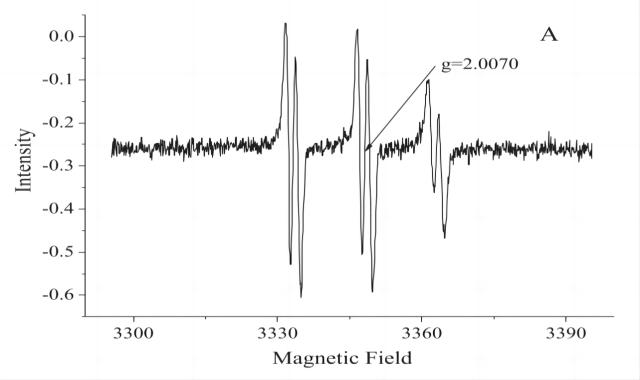
For example, when PBN is used to trap radicals generated during peanut oil oxidation, stable radical adducts form. The EPR spectra of these adducts provide direct insight into oil oxidation. The stronger the EPR signal, the higher the free radical content, and the more oxidized the oil is.
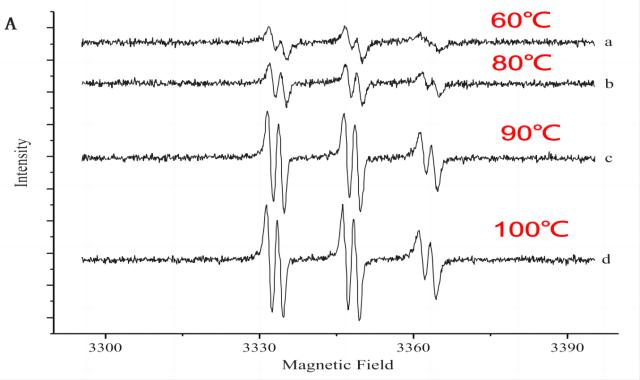
EPR spectra also reveal the effects of external factors, such as temperature. As temperature increases, the EPR signal intensity of radicals rises, indicating that higher temperatures accelerate oil oxidation.


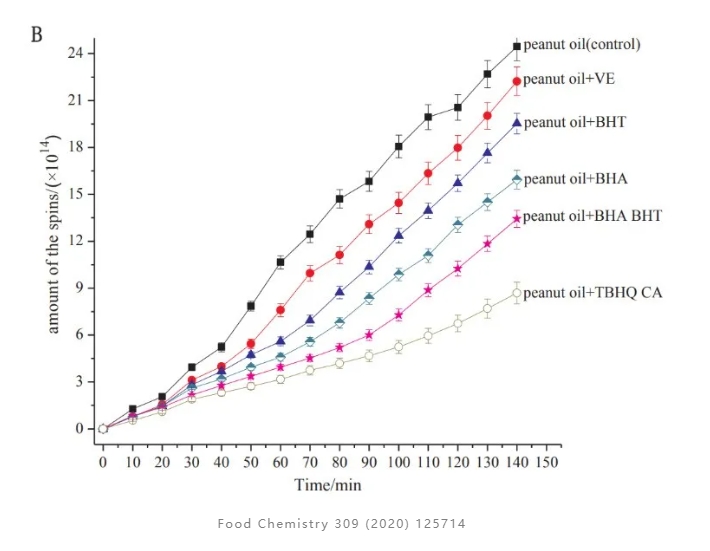
This study compares the effects of different antioxidants on the EPR signal intensity of peanut oil. Various antioxidants were added to the oil, including VE, BHT, BHA, a combination of BHA + BHT, and a combination of TBHQ + CA. As shown in the Figure, the Y-axis represents the spin concentration. Samples with added antioxidants show significantly lower spin signals compared to the control (peanut oil control, black line). This indicates that antioxidants effectively reduce free radical formation during oil oxidation.
The contribution of each antioxidant to oil stability differs. The observed order of effectiveness is: TBHQ + CA > BHA + BHT > BHA > BHT > VE. Notably, the combination of BHA + BHT performs better than either BHA or BHT alone. The combination of TBHQ + CA shows the best antioxidant effect
This enhanced effect is partly due to metal ions, especially Cu²⁺ and Fe²⁺, which can catalyze oil oxidation. CA acts as a chelating agent, binding metal ions and further preventing oxidative reactions.

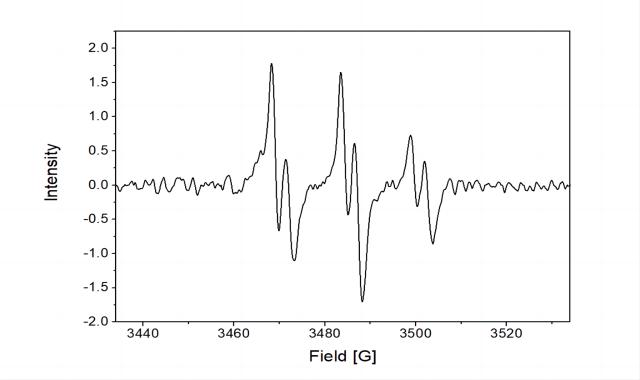
"Gutter oil" refers to recycled restaurant oil, often degraded by repeated heating. EPR can detect high levels of free radicals, assessing quality and safety.
The method is straightforward:
Use refined plant oil as raw material and add PBN spin trap.
Measure radical intensity before and after adulteration.
Apply spectral fitting to build a standard curve linking radical intensity to adulteration ratio.
This approach is highly sensitive and easy to operate. It can accurately quantify adulteration below 20%, providing a reliable tool for quality control.

Reference: A method for identifying gutter oil in refined vegetable oil, 201610515761.X
Detects radicals in oils, as well as paramagnetic molecules, rare earth ions, ion clusters, doped materials, defects, and metalloproteins.
Applications extend to chemistry, biology, physics, medicine, food, and industry.
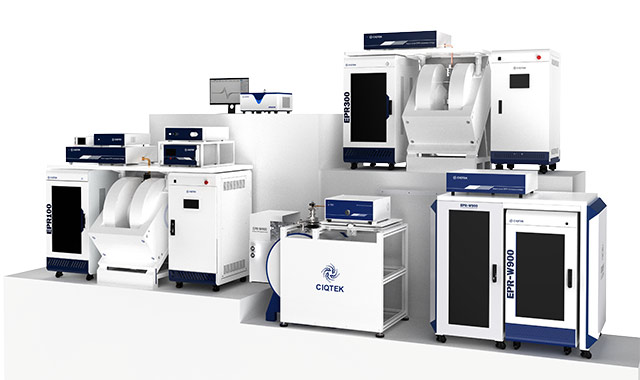
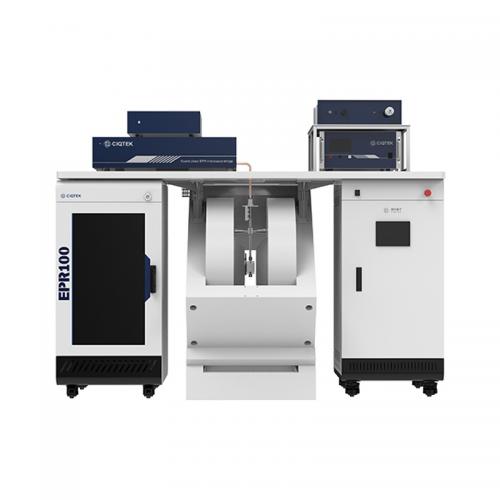
CIQTEK X-band pulse electron paramagnetic resonance (EPR or ESR) spectrometer EPR100 supports both continuous-wave EPR and pulse EPR functions. In addition to supporting conventional continuous-wave EPR experiments, the EPR100 can also finely control and measure electron spin quantum states using specific pulse sequences. This enables pulse EPR tests such as T1, T2, ESEEM (electron spin echo envelope modulation), HYSCORE (hyperfine sublevel correlation), etc. The EPR100 instrument offers a comprehensive range of optional accessories, such as ENDOR, DEER, TR-EPR, and AWG modules, which fully meet the requirements of all current pulsed EPR experimental modes. When paired with a variable temperature system, it enables the detection of paramagnetic substances at ultralow temperatures. Pulsed EPR spectroscopy provides higher spectral resolution, revealing the hyperfine interactions between electrons and nuclei and delivering more detailed structural information. This capability is irreplaceable and crucial in scientific research areas such as materials science, biomolecular structure analysis, etc.
Learn More
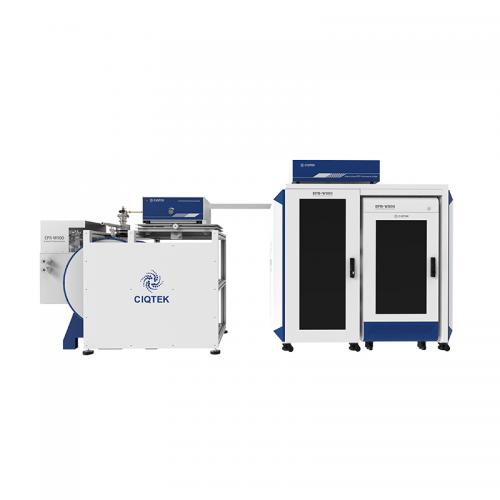
High-Frequency & High-Field Pulse Electron Paramagnetic Resonance (EPR) at W-Band (94 GHz) High-frequency EPR technology offers numerous advantages, such as high g-value resolution and minimal sample volume. It is highly applicable in biology, chemistry, and materials science. CIQTEK EPR-W900 supports both continuous-wave and pulsed EPR measurement, including ENDOR, and enables variable temperature experiments from 4 to 300 K. It is equipped with a split-pair superconducting magnet, with a maximum magnetic field of up to 6 T. The superconducting magnet, combined with a cryogen‐free cryogenic system, stabilizes the temperature in the superconducting region without consuming liquid helium, ensuring stable operation and easy maintenance. The EPR software platform is the same as the CIQTEK X-band pulsed spectrometer, making it simple and user-friendly.
Learn More
Modernize and upgrade your old EPR instrument for cutting-edge EPR research This Modernization service will bring you features including: ▶ Higher Sensitivity: Ultra-low noise microwave source and signal detection technology ▶ Better Resolution: Precise magnetic field control technology ▶ Excellent Compatibility: Compatible with a wide range of EPR spectrometers ▶ Fast Delivery: Complete delivery of the modernized hardware within 2-6 months ▶ High-quality Service: On-site installation and 2-year warranty ★ Email us for more details: info@ciqtek.com
Learn More
X-Band Benchtop Electron Paramagnetic Resonance Spectrometer The CIQTEK EPR200M is a newly designed benchtop EPR spectrometer specializing in the qualitative and quantitative analysis of free radicals, transition metal ions, material doping and defects. It is an excellent research tool for real-time monitoring of chemical reactions, in-depth evaluation of material properties, and exploration of pollutant degradation mechanisms in environmental science. The EPR200M adopts a compact design and highly integrates the microwave source, magnetic field, probe, and main controller, ensuring sensitivity and stability while being compatible with diverse experimental needs. The user-friendly interface allows even first-time users to start quickly, making the EPR instrument truly easy to use. ★ Email our experts for custom solutions, quotes, or detailed brochures: info@ciqtek.com
Learn More
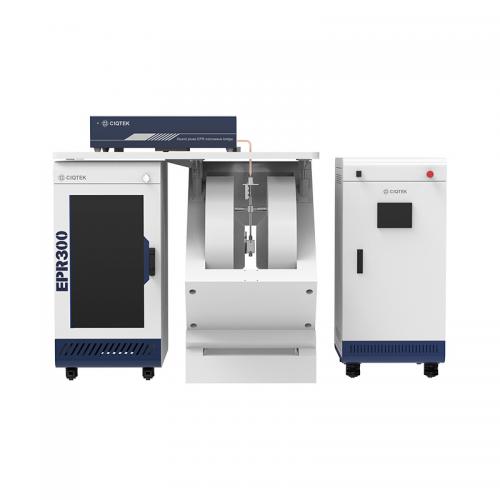
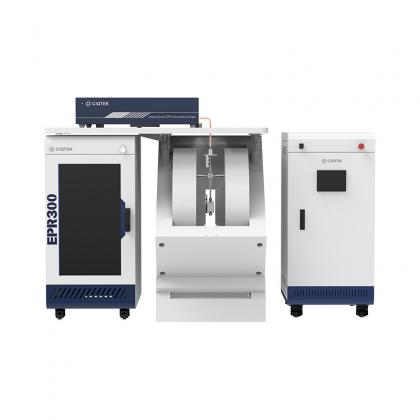
The CIQTEK EPR300 Electron Paramagnetic Resonance (EPR) Spectrometer incorporates the latest microwave technology and an ultra-high-performance signal processing unit, significantly enhancing detection sensitivity and signal-to-noise ratio to an unprecedented level. It enables precise detection and analysis of unpaired electron signals even at extremely low spin concentrations, providing a novel approach for exploring microscopic physical and chemical properties of low-concentration substances such as free radicals and metal ions. Additionally, the EPR300 supports easy upgrades from X Band to Q Band, achieving higher g-value resolution, which is advantageous for detecting anisotropic samples. The EPR300 establishes a solid experimental foundation for cutting-edge research in life sciences, materials science, chemistry, and physics, driving scientific discoveries to new milestones.
Learn More
Compared with conventional X-band electron paramagnetic resonance (EPR), high-frequency EPR offers significant advantages and provides important capabilities across biological, chemical, and materials research. CIQTEK EPR-Q400 is a Q-band high-frequency pulse EPR spectrometer equipped with both continuous-wave (CW) and pulse EPR measurement modes (for CW-only experiments, the EPR-Q300 CW spectrometer is available). It supports variable-temperature experiments from 4 to 300 K. The EPR software platform is the same as the other CIQTEK X-band pulse spectrometers, making it simple and user-friendly.
Learn More
No. 1969, Kongquetai Road, High-tech Zone, Hefei, Anhui, China
+8615156059133
+8613083191369
info@ciqtek.com
Sitemap | XML | Blog | Privacy Policy | IPv6 network supported